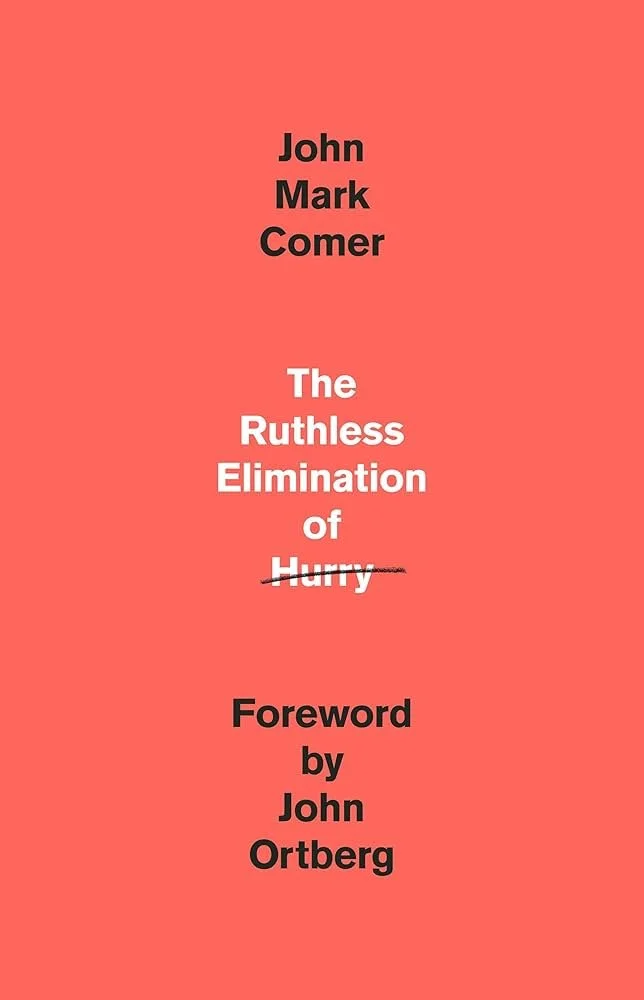
The Ruthless Elimination of Hurry is a nonfiction book that explores the benefits of slowing down your life to become more emotionally healthy, spiritually grounded, and present with others.
The central idea is that constant busyness isn’t just a scheduling problem — it’s a spiritual and psychological problem. Hurry quietly erodes joy, relationships, attention, and depth of thought. We don’t know how to live intentionally.
The book is about practical lifestyle advice and thoughtful reflections on faith, philosophy, and contemporary culture. It speaks of adopting habits such as rest, silence, simplicity, and intentional limits on technology, to create space for meaning rather than noise. These are things that a lot of us already know, but are so addicted to the world, we do not know how to shut it off.
In short, it speaks of a more thoughtful life in a world that rewards speed.
“Who is John Mark Comer?
John Mark Comer lives in Portland, Oregon and pastors Bridgetown Church, right in the center of the city. Bridgetown is built on the idea of practicing the way of Jesus together. John Mark has authored several books, including The Ruthless Elimination of Hurry and God Has a Name. John Mark said, “My life’s ambition is to be with Jesus, become like him, and do what he did. My prayer is that the stuff I make helps you do the same.””
The book starts with a personal turning point for the author. John Mark Comer was the lead pastor for several churches in Portland, Oregon, and goodness, were these churches growing. 1,000 new people a year for the better part of a decade. This sounds great, right? Thats a lot of new people learning about the good news of Jesus; that’s something that we are all about. The downside was that he found himself in a state of permanent exhaustion. Great anxiety and emotional fragmentation, despite outward success, led him to feel productive but hollow, crowded yet disconnected. As this madness came to a head, he sought help from a friend, John Ortberg, who had been mentored by Dallas Willard, who understood what he was going through. It came down to one word: hurry.
Hurry, in his case, was not a temporary malady; it had become his way of doing life. Not a minor inconvenience, but a destructive force that, if not destroying, was certainly undermining the truly important things: love, joy, peace, and spiritual depth.
How did this happen? Death by 1,000 cuts. Or maybe 2,617 - the number of times the average person touches their phone - taps, swipes, clicks - every day. (The higher end users are over 5,400). The really creepy part is that most of the leadership from social media companies sends their kids to schools where social media is not allowed - they know it is addictive and addictive by design. I knew a lot of these numbers, but I was appalled when I began to think about the opportunity cost of these amounts of time. Comer did not stop there. He talked about emails before going to bed, binge-watching TV shows (Landman, anyone?), and days upon days filled with meeting after meeting, which are superficial in nature and of little or no value. He was not fully there with his family. He was always in the middle of several text message discussions. He detailed an incredible frenetic life in a terribly frenetic way. His writing style was making me feel anxious. It was just so much, and I couldn’t imagine the amount of pressure he must have been under.
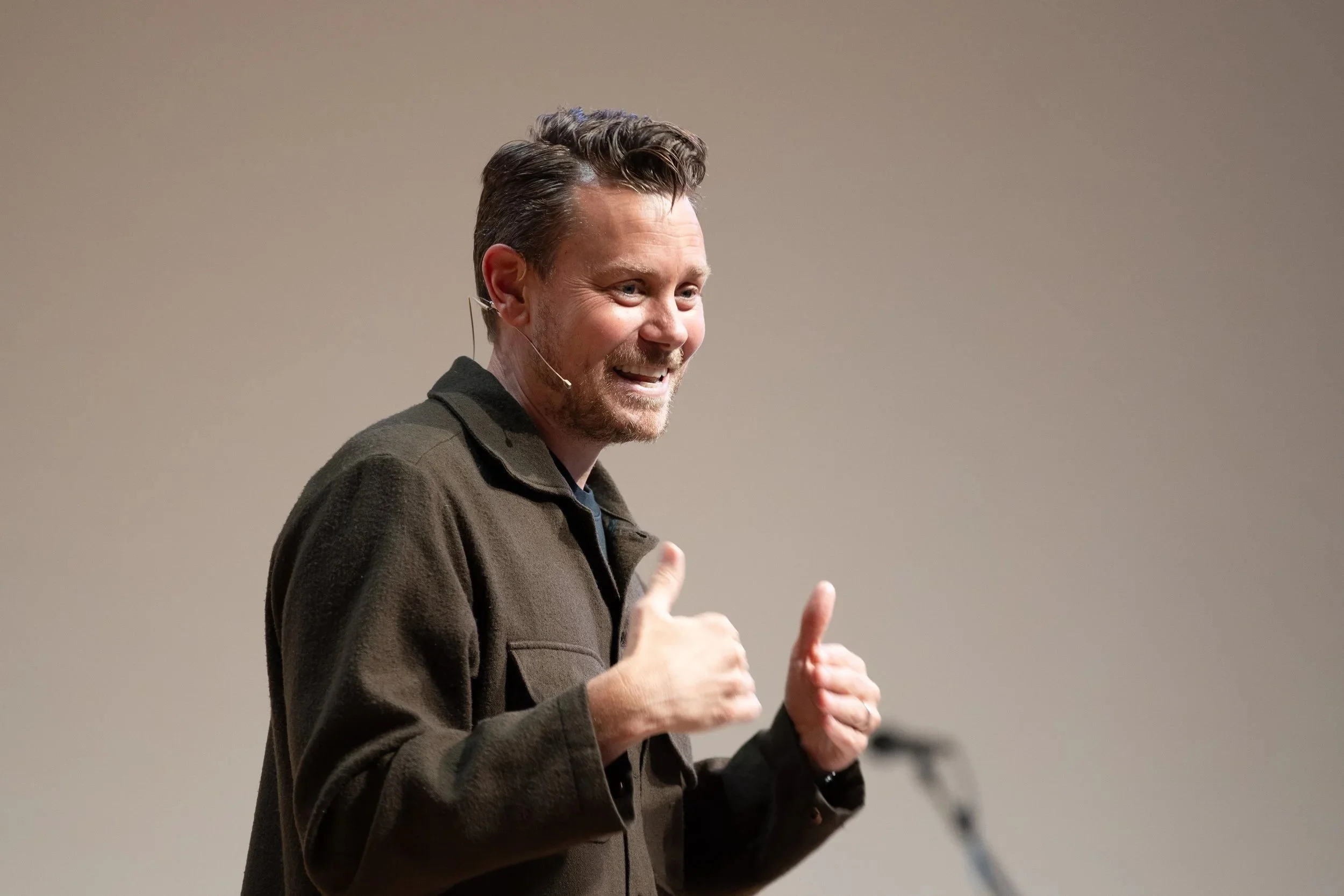
And then he stepped away. Decided to stop running several churches so that he could focus on just one. Stop being a mile wide and an inch deep and start paying attention to the things that really matter, deeply and intentionally.
He took flak for it. Some said he was not following God’s plan for his life. That he was selfish. I think that was an absurd notion, especially in light of the focus of why he slowed down: He wanted to be more like Jesus. Can you think of one single time that Jesus was in a hurry? I cannot. In fact, I can think of lots of times when Jesus might have hurried and did not. Oh, Lazarus is going to die? Jesus did not leave for 2 days. He. Did. Not. Hurry.
Essentially, the prologue sets up the book’s central thesis: A hurried life is incompatible with a deeply formed inner life, and eliminating hurry is vital to becoming a healthier, more present human being.
My personal takeaway was that I could really do a lot more to close the distance with Christ. I waste an amazing amount of time. What has the opportunity cost been of this lifestyle? I tried not to think too long on this one, as there is not a damn thing I can do about what has been. There are some changes that I need to make.
Part One: The Problem: Hurry: The Great Enemy of Spiritual Life
“If the devil can’t make you sin, he’ll make you busy,” Corrie ten Boom
When you meet someone and ask how they’re doing, what is the standard response? “Good, but really busy.”
There is good busy. When I am doing meaningful things: spending time with family, etc.
Jesus was busy
This new speed of life is anti-Christian
Our speed goes against loving the Lord with all your heart, mind, and strength.
When we are totally spent, running late, and overloaded, pay attention to the way in which we treat the people we care about the most.
Hurry and Love are oil and water - they just do not mix
We speak of walking with God; no one talks about running with God. It is because God is love; no hurry.
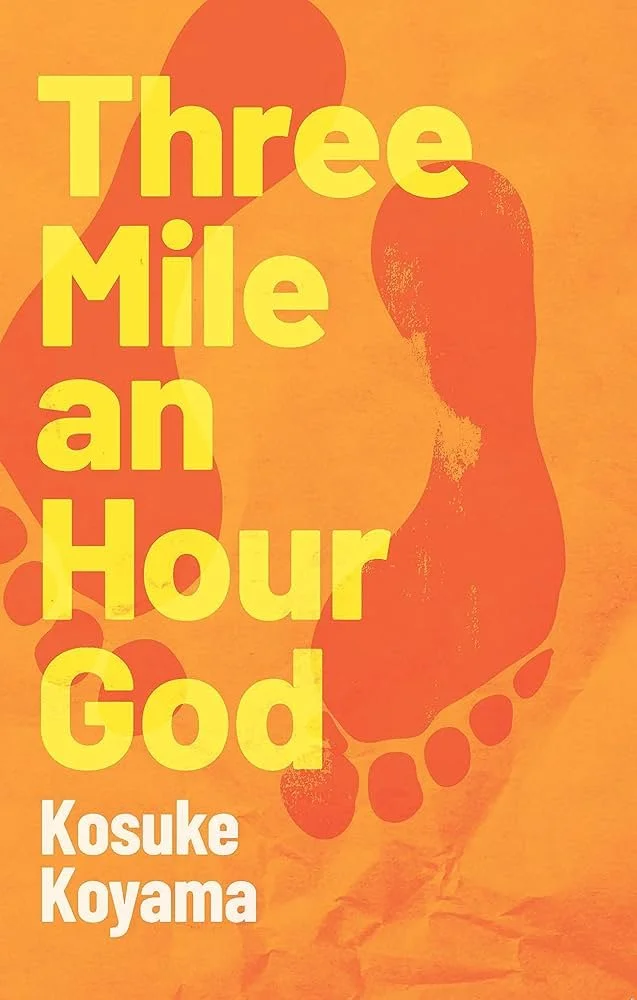
“God walks slowly bc He is love. If He were not love, He would have gone much faster. Love has its speed. It is an inner speed. It is a spiritual speed. It is a different kind of speed from the technological speed that we know. It is slow, yet it is lord over all other speeds since it is the speed of love.” Kosuke Koyama - Three Mile and Hour God
In our culture, slow is a pejorative.
In our culture, the message is clear: fast is good, slow is bad.
Secret to happiness/mindfulness - presence to the moment. The more present to now, the more joy we tap into.
When late or hurrying, feel any shalom??
When my kids are dragging to get out the door, am I the best version of myself in that moment?
“I cannot live in the kingdom of God with a hurried soul” - John Ortberg
I am more distracted than non-spiritual. When I become more interested in what TV show, YouTuber, post, sport, or whatever, and the fantasy life they create in my mind, than I am in church.
Pathological busyness.
There are times for hurry - water broke?? Hurry!
Is busy contagious? If everyone is doing it, does it impact you such that you speed up?
If I am so distracted, will I skim my life instead of actually fully living it? Could my spiritual life be at risk based on how I spend my time?
41 “Martha, Martha,” the Lord answered, “you are worried and upset about many things, 42 but few things are needed—or indeed only one.[a] Mary has chosen what is better, and it will not be taken away from her.” Luke 10:41-42
This is all not a new thing - this idea of distractedness and how we spend our hours. When the sundial was invented, people in Greece freaked out that it was going to destroy their way of life.
Clocks which were built to tell people when it was time to pray. Prior to this, the sun and moon gave us the rhythm of the day.
Artificial time is not so good. Perhaps we became more efficient when we started using clocks, but the circadian rhythm took a big hit. Plus, God controls the sun and moon. Now, clocks/employers tell us when to sleep.
Before the lightbulb, the average person used to sleep 11 hours a night. Today, we think that 7 hours is enough. No wonder we are all so damn tired.
The concept of wealth has changed. Before you were wealthy, if you had a lot of leisure time. Now, if you are working 80-hour weeks, you are judged wealthy. Busy is judged as success!!
It should shock no one that keeping the Sabbath holy has gone by the way side. There used to be places that would close on Sundays. No more. We not only lost a day of rest, but we also lost a day for our souls to be with God.
2007 - the iPhone drops, and our distractedness explodes.
The real question is what all of this distraction, etc. doing to our souls
Hurry Sickness
Irritability - way too easy. Tiny things piss you off. To diagnose, look at how you treat the people closest to you.
Hyper sensitivity - minor comments to hurt your feelings, grumpy emails. Small things quickly escalate into major events. Ordinary problems have disproportionate impacts on your emotional well-being.
Restlessness - when you do try to slow down, you can’t. Can’t focus on reading. Quiet time with God, and you cannot quiet your mind. Go to bed and toss and turn. When you're hyped up on speed, and you do not get the next dopamine rush, you can’t deal.
Workaholism or non-stop activity - you cannot stop or do not know how to stop. Can be careerism or obsessive house cleaning. By day’s end, you have nothing left to give to the people closest to you.
Emotional numbness - you can’t feel your own pain or that of others; empathy is not something you have. There is no time for this.
Out of Order priorities - disconnected from your identity or calling. Life is reactive, not proactive. You feel like you do not have the time for the things that really matter to you. You get sucked into the world of urgent, not important.
Lack of care for your body - sleeping well, exercising, gaining weight, waking up tired. Live off caffeine, sugar, processed carbs, and alcohol.
Escapist behaviors - when we are too tired to do what is actually good for our souls, we turn to the distraction of our choice. Eating, drinking, binge-watching Netflix, surfing the web, and social media. They are okay in small doses, but when they become the norm or are abused to escape reality, they eat us alive. We get stuck in the negative feedback loop of socially acceptable addictions.
Slippage of spiritual disciplines - when we get too busy, the things that are truly life-giving for our souls are oftentimes the first thing to go; we let them go, instead of leaning into them during the tough times. Quiet time in the morning, reading scripture, prayer, sabbath, worship, meals with family. The things that make for rest actually take some emotional energy and self-discipline. When over-busy, we get over-tired, and we no longer have the energy or discipline to do what we need most for our souls. We don’t have a life with God, we have a life with TV and a glass of wine. We do not feel soul-rested after watching Netflix like we would if we spent some time with God. Emotional crash incoming…
Isolation - you feel disconnected from God, others, and your own soul. Rare times when we stop to pray, and I mean sit with God in the quiet. We are so stressed that we cannot enjoy the father’s company. Same with friends. We cannot set the phone down or a million miles away in your mind.
Now, score it - how many of these actions describe what you do? Do not feel guilt or shame for how many you get.
We are doing violence to our souls. We do not have time for love; love takes time. Relationships take time. We don’t have the time for the people we love.
It kills wisdom. Wisdom is born in the quiet, the slow. It has its own pace; it will make you wait for it. The inner voice will wait till the waters are calm and you are ready. Other times, the voice can be heard, but we are too busy to listen to it.
Attention is the start of devotion. No energy, no attention. Attention is our scarcest resource.
The two things that we used to think of as the most valuable are time and money. But attention is more vital; it leads to awareness. In the problem of humans not feeling connected to or near God, it is not God’s fault. God is everywhere and every time. It is our awareness of God that is the problem.
We are the ones who are absent, not God.
Where you put your attention, it is what you will become.
We become what we give our attention to.
“For what does it benefit someone to gain the whole world and yet lose his life?”
Citations:
Sussex Publishers. (n.d.). The hurry sickness of Hustle Culture. Psychology Today. https://www.psychologytoday.com/us/blog/optimized/202601/the-hurry-sickness-of-hustle-culture
Hailes2017-11-23T00:00:00+00:00, Sam. “John Mark Comer: Reaching America’s Most Secular City.” Premier Christianity, 23 Nov. 2017, www.premierchristianity.com/interviews/john-mark-comer-reaching-americas-most-secular-city/874.article.