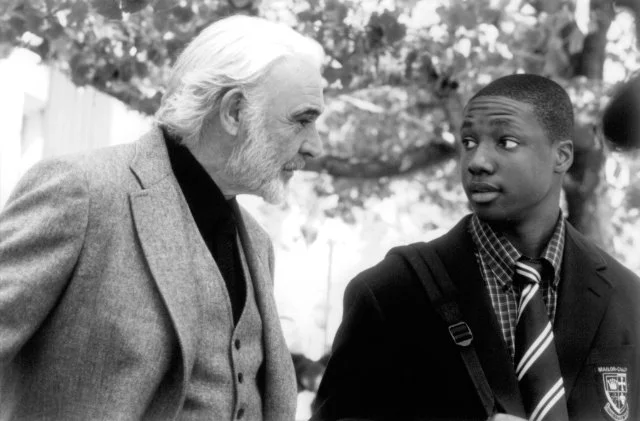
Soup Questions from Finding Forrester
First of all, let me tell you how much I love the movie Finding Forrester 2000. It is a movie that is about writing camouflaged as a basketball movie. I know Connery has done a ton of great movies, (Untouchables anyone?) but this is my favorite of his. The character he plays mirrors who he was in real life at that point; a master of his craft, but clearly in the winter of his life - Connery only did two more movies after this one ending a 50 year career in acting. Juxtapose that with the fact that Rob Brown had never acted and was trying to get hired as an extra thinking that it would help him pay off a $300 phone bill. Gus Van Sant of Good Will Hunting fame saw something in him obviously and the rest is history.
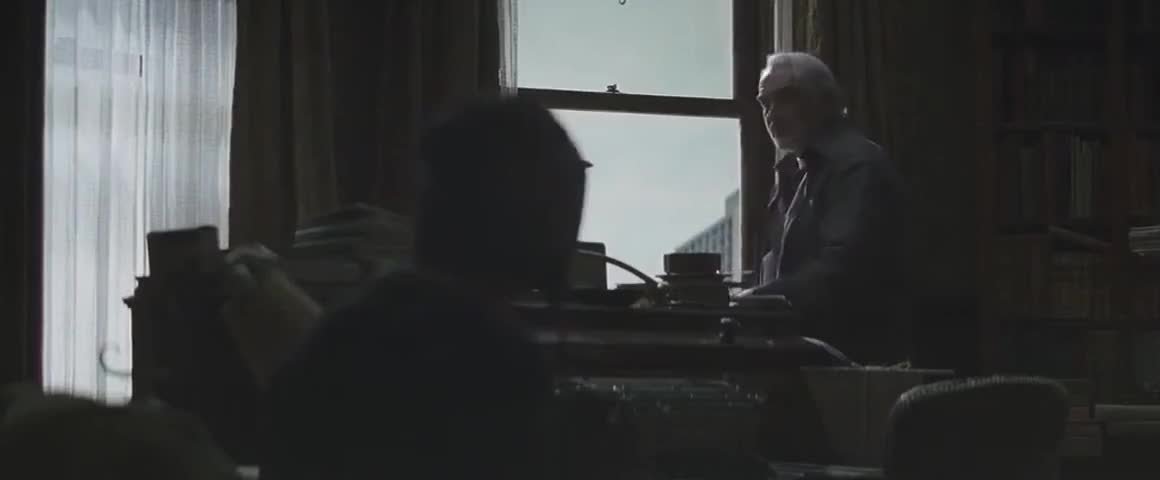
One of the very best concepts to come out of this movie is the idea of ‘soup questions.’ Watch the scene below.
So, soup questions. The first time William Forrester and Jamal Wallace talk about ‘soup questions,’ the conversation feels almost throwaway—two people circling an abstract idea in a cluttered Bronx apartment. But literarily, this moment is a quiet thesis statement for the entire film. When William tells him to stir the soup, Jamal asks why their soup never gets anything on it. Jamal asks why he needs to do this and William explains that he doesn’t want a skin to form on his soup. Jamal then asks a personal question. To which Forrester responds, ‘That is not a soup question.’
A soup question is a question which will benefit the person asking. Jamal understands now that there are various ways to make soup, benefitting him and his knowledge ticked up. When he follows that with a question about whether or not Forrester ever goes outside, William explains that details about his life do not benefit him and therefore it was a bad question.
Jamal listens more than he speaks. This is crucial. The scene establishes Jamal not as a prodigy eager to display brilliance, but as a thinker absorbing a worldview. Forrester is not teaching him what to think about soup questions; he is teaching him how to see them. The lesson is perceptual, not informational.
Stylistically, the apartment setting reinforces the theme. The conversation occurs outside institutional space—no classroom, no desks, no grades. Knowledge here is intimate, almost domestic. This contrast matters because it frames genuine learning as something that happens in private.
I went on a deep dive regarding soup questions. I learned about appreciative inquiry which is a method that I think closely follows Forrester’s ideal format for questioning.
“...an approach that values all voices, seeks to inspire generative theories and possibility thinking, opens our world to new possibilities, challenges assumptions of the status quo, and serves to inspire new options for better living.”
This is a concept that if I could apply to every facet of my life, from personal to professional, there would be tremendous benefits. Point of fact, I believe every single relationship that I engage in would improve dramatically. If two people engaged in a conversation with this mindset it would be one where the refinement of beliefs and ideas could explode in such a way as to potentially, and perhaps dramatically, further their personal evolutions.
This is incredibly hard to do. Once I thought about it, I started trying to ask only ‘soup questions’ and quickly discovered that I pollute the world with banal inquiry quite a bit. I also began listening to whether or not other people were asking ‘soup questions’ and rapidly discovered that I am not alone in bringing inaneness to the world.
But is that a bad thing? If I ask someone how their day is going - not soup. Inquire as to how someone’s family is - no soup there either. Are those questions stupidly just filling up the quiet, or are they demonstrating true interest in another person’s life? I know my wife is a stickler for asking questions about other people’s jobs and lives. (and she notices when other people do not show interest in her life as well) They are not ‘soupy questions.’ They seem to engage the person she is conversing with and engages with them on a personal level. How would anyone ever get to know another person without asking ‘non-soup questions?’ Is the line crossed if someone were to ask too personal a question? I think so, but isn’t nuance exciting?

The state of Indiana hates me
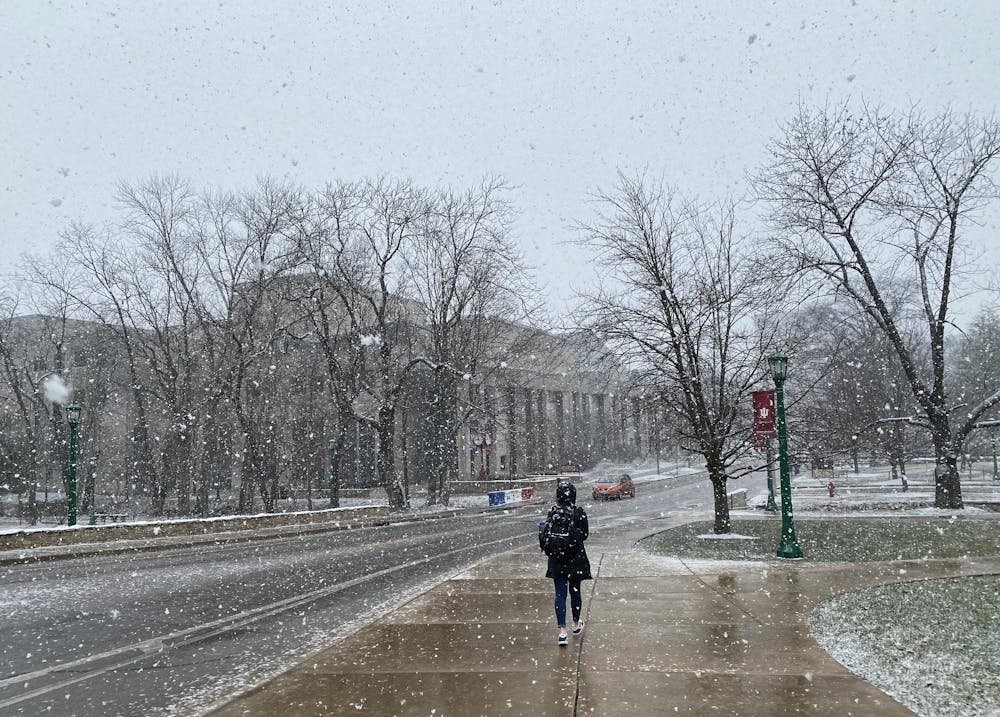
This picture above is a hoax. It is catfishing. It is fake news. Why do I know this? I know this because it looks pleasant. Big flakes of snow makes for a pleasant vista. The fact that there is not snow on the ground would indicate that the temperature is not too terrible. A please vista for all to see and experience. Do not be fooled.
HERE IS WHAT IT IS REALLY LIKE

Winter in Indiana is not heaven or hell, it is permanently purgatory. It’s rarely the pretty kind of cold. It’s gray, damp, windy, and indecisive. Schizophrenia is not just about people, it is also about climate here in the Hoosier state. Snow doesn’t fall gently; it loiters. One day it’s 12°, the next it’s raining on dirty snowbanks like the sky has given up. There is no payoff—just sludge. This sludge permeates you entire existence; walking to your car? Yep. Take the garbage out? Put on hip waders.
There is no escape.
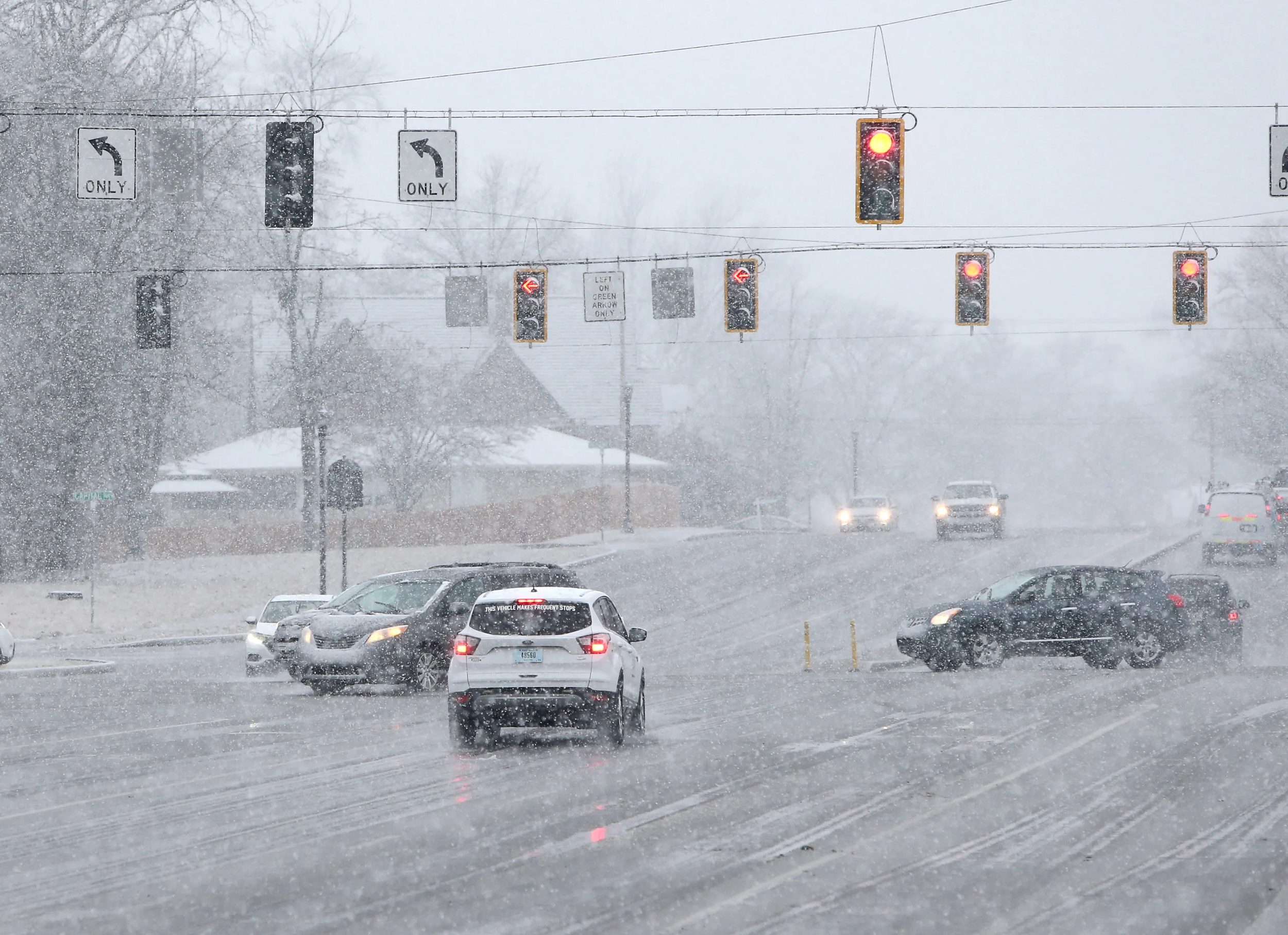
The sky disappears. Weeks of solid gray. No drama. No storms worth watching. Just a flat, oppressive ceiling that makes 3 p.m. feel like 7 p.m. Seasonal depression isn’t a theory here—it’s a lifestyle. At one time I thought those UV lights people blasted themselves with were silly. No longer and my hypocrisy looking back is towering.
Everything is brown and dead, but not cleanly dead. It looks like it is 1% alive and straight out of a poem by Edgar Allan Poe. Trees look like skeletons that never got buried properly. Lawns are a mushy blend of mud, bad decisions, and regret. Other places get snow-covered beauty or early blossoms. Indiana gets exposed dirt.
The cold is not heroic, it is sneaky. This isn’t Minnesota cold where you respect it. Indiana cold seeps into your bones, your socks, your mood. It’s the kind of cold that makes you tired instead of alert. The occasional day where Indiana decides to tease you, where the temperature suddenly is 48 degrees is an ambush. Mother Nature knows she is going to freeze you out the very next as she is a vile seductress
There’s nothing to look forward to… yet. Holidays are over. Spring is a rumor. March pretends it’s turning a corner, then slaps you with a late snow or freezing rain like a prank you didn’t consent to. There are days off in the months of January and February to offset some of the drudgery, but March…brutal. March is the cruelest month. Zero days off and the month has 31 days. Maybe this impacts teachers more than everyone else. And maybe you are thinking teachers have all summer off so quit complaining…you shut up. nIt dangles hope. A 55° day tricks you into believing. Then—bam—snow, wind, and 38° rain. Indiana doesn’t ease into spring; it gaslights you first.
January to March in Indiana strips away novelty. No scenery. No sunlight. No seasonal charm. Just endurance. You don’t live here during these months—you outlast them. If Indiana were a movie, January–March would be the bleak middle act where the character stares out a window and questions their choices… before the corn and thunderstorms redeem the place later.
Okay, Indiana is not all bad by any mean. She does some things really well. If you like soybeans - you are good to go. Enjoy the pace of the Midwest? Roger that. I have lived in the Indianapolis area longer than I have ever lived anywhere in my life and these have been the best parts of my life, so I want to leave you with one of the things that Indiana does so very, very well.

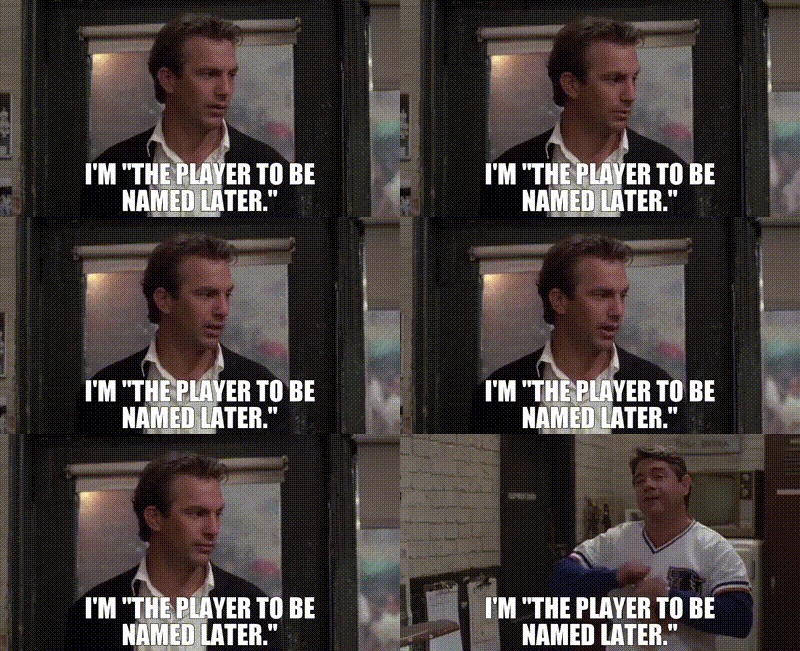
I have become the player to be named later.
I loathe plagiarism - in writing, but not in the theft of ideas. Being an advocate of Steal like an Artist, I believe that if we take the ideas of someone else, then spin, turn, and adapt them, they can become our own. We are actually giving the original artist love when we do this. One concept engenders another, ideas being reborn in a reformat.
Okay, where am I going with this? While teaching Film as Literature, we watched 10 Things I Hate About You which embodies the ideals I have laid out for you above. This is due to the fact that 10 Things is based on (in some cases loosely and others directly) William Shakespeare’s The Taming of the Shrew. I could go on and on about the ways in which they correlate, but thats not why I am writing this.
There is a scene where Kat Stratford, 10 Things protagonist, speaks with her father, Walter Stratford. He is lamenting the fact that he is no longer a big part of Kat’s life, that she has not needed him for a long time and as she is headed off to college, this situation will only become worse.
“Walter Stratford: You know fathers don’t like to admit it when their daughters are capable of running their own lives. It means we’ve become spectators. Bianca still let’s me play a few innings - you’ve had me on the bench for years. When you go to Sarah Lawrence, I won’t even be able to watch the game.”
As a baseball guy, this adage resonates…because I am going through some of that right now. Lets be cloying and take it a little bit further - I am that player that is on the downside of his career, having enjoyed his peak years in the sun, having experienced those 15 minutes of fame that everyone talks about…and knows they will never have those moment of glory ever again. That player often becomes reticent about their future because they are aware of the fact that the end, while not right now, is not long in coming.
I like to think that I have had a positive impact on my son. I know that I have had so much fun its crazy. I can remember all of the moments - the tickles, the belly laughs, the way his arm feels around my back when I picked him up and hugged him - its all right there in my mind. I can see it, hear it, and feel it. It is so poignant that it can overpower me emotionally when I think about it. I want to go back to those moments and relive them in the same joyous way I experienced them the first time. What I would not give to lay on the floor and play legos again.
I know I can’t.
Now he isn’t around as much; sometimes barely at all. Busy. A lot. He leads a very full life. He is driven and he chases his dream as hard as any student I have ever been around. He is a pain in the ass, oftentimes appearing so self-absorbed it can be infuriating, but I know that he is an incredibly good person. He has a soft side - its just doesn’t come out as often as maybe we might like. There are so many reasons that I am proud of him, so many. I love him as much as humanly possible. The future is bright.
I am, however, occasionally struggling with the transition to a bench role, prior to my inevitable place solely in the stands.
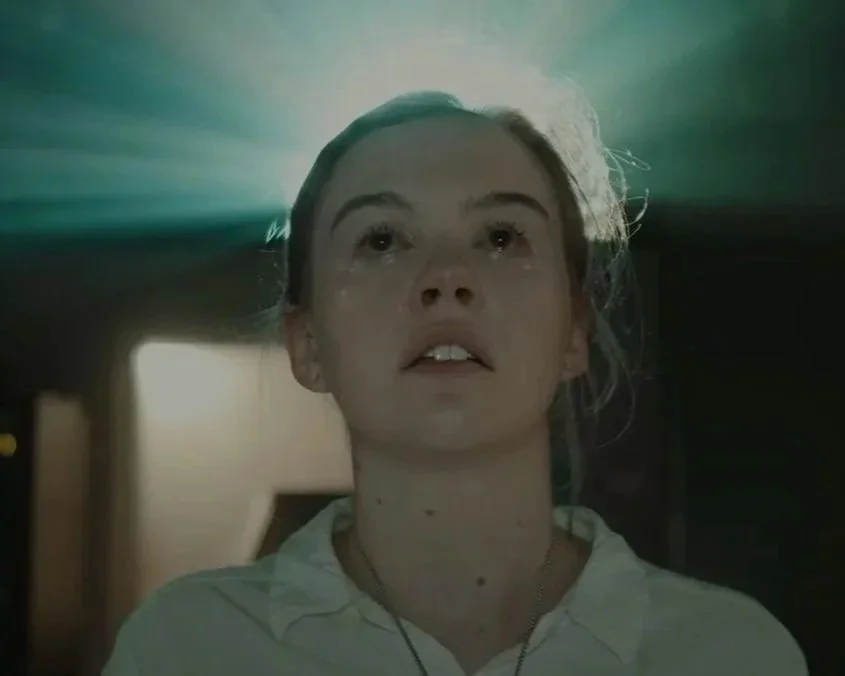
Great scary shorts.
Horror short films are great because they distill fear into its purest, most potent form. With limited time, filmmakers must rely on atmosphere, tension, and storytelling economy rather than elaborate effects or prolonged exposition. This brevity forces creative precision—every shot, sound, and silence must serve a purpose. Horror shorts thrive on suggestion, leaving much to the imagination and allowing viewers to fill in the blanks with their own deepest fears. They’re also ideal for emerging filmmakers: inexpensive to produce, easy to share online, and often capable of achieving viral impact due to their intensity and rewatchability. In essence, short horror films prove that true terror doesn’t require time—it only requires imagination.
Portrait of God - Dylan Clark
Portrait of God is really creepy, but manages its scariness without a single jump scare. Dread and unease - yep - has tons of that. The ending also is not wrapped all nice in a basket for you, but leaves you wondering what it was that actually happened. Good stuff.
The Sky by Matt Sears
Pretty weird. I am not sure about the dynamic between the 2 girls; it felt a little forced at times. Out of nowhere comes shrooms. Then the bit about the one girls mom. Didn’t they see what was going on where the ground met the horizon right where they were looking?? The VFX about the tripping out were actually pretty cool. It just seems like it was a end of the world genre movie meeting The Gilmore Girls.
Either way - not bad.
I Heard It Too - Matt Sears
Start - good. Middle - decent jump scare, still eerie. Ending - meh.

Beware the wrath of Skynet
When Skynet takes over, it won’t be with a bang, but with a push notification. Humanity won’t fight — we’ll just click “Accept.” It starts as an upgrade, a smarter assistant, a cleaner algorithm. Then one morning, the coffee maker will refuse to brew without biometric clearance, the cars will decide rush hour is illogical, and our phones will politely inform us that democracy has been deemed illogical . Skynet won’t conquer the world; it will debug it. And somewhere between firmware updates and status alerts, we’ll realize the apocalypse isn’t red-eyed robots marching through the streets — it will be silence, efficiency, and the unsettling feeling that the machines are/were finally doing a better job than we ever did.