The Road by Cormac McCarthy
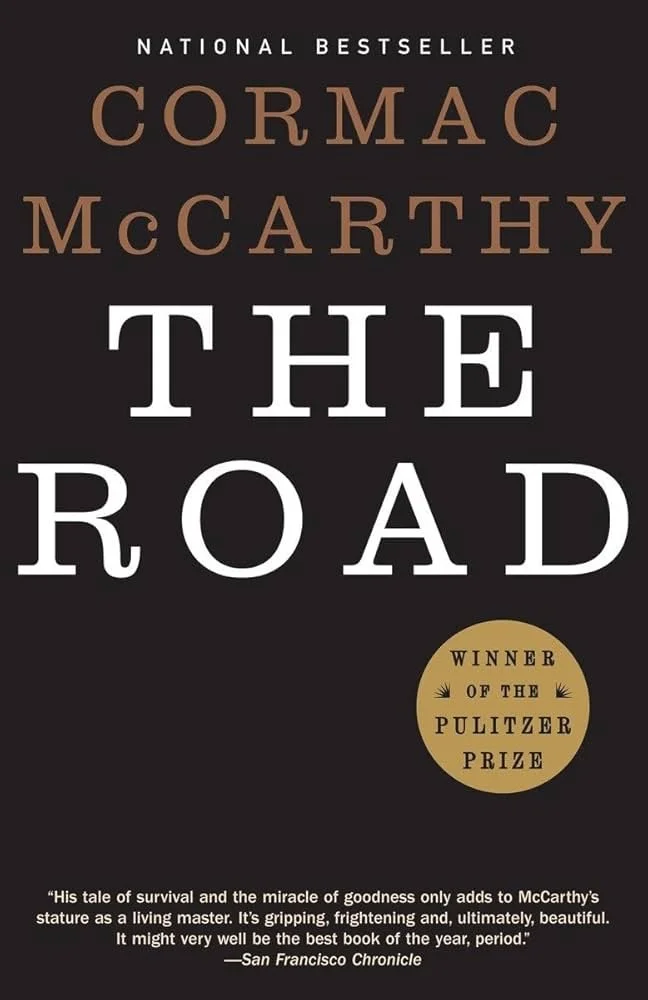
I am always on the lookout for another book to read. Saw The Road by Cormac McCarthy in the library at school, which, by the way, does a really good job of putting books out for students (and teachers) to see. I noticed that it was a Pulitzer Prize winner, so I thought it would be a good read. I asked Sarah Gibbs, WHS's everything person, about it and became more intrigued. Libby app here I come.
Goodness gracious, this is a depressing read. It is ponderous and macabre and morbid, yet all the while hauntingly fascinating. The Road is a stark novel that takes storytelling down to the bare essentials. Set in a post-apocalyptic world where civilization has totally collapsed, the book follows a father and son as they journey south through an utterly destroyed America, where the only hope is to try to survive another day. There is no explanation as to why the world ended, but there are clues along the way. I believe that this was an intentional choice. The story is less about what happened and more about what remains when all things familiar have disappeared. This yarn is about enduring hardship, love, and attempting to maintain one’s moral compass. In this world there are no rewards for goodness of character.
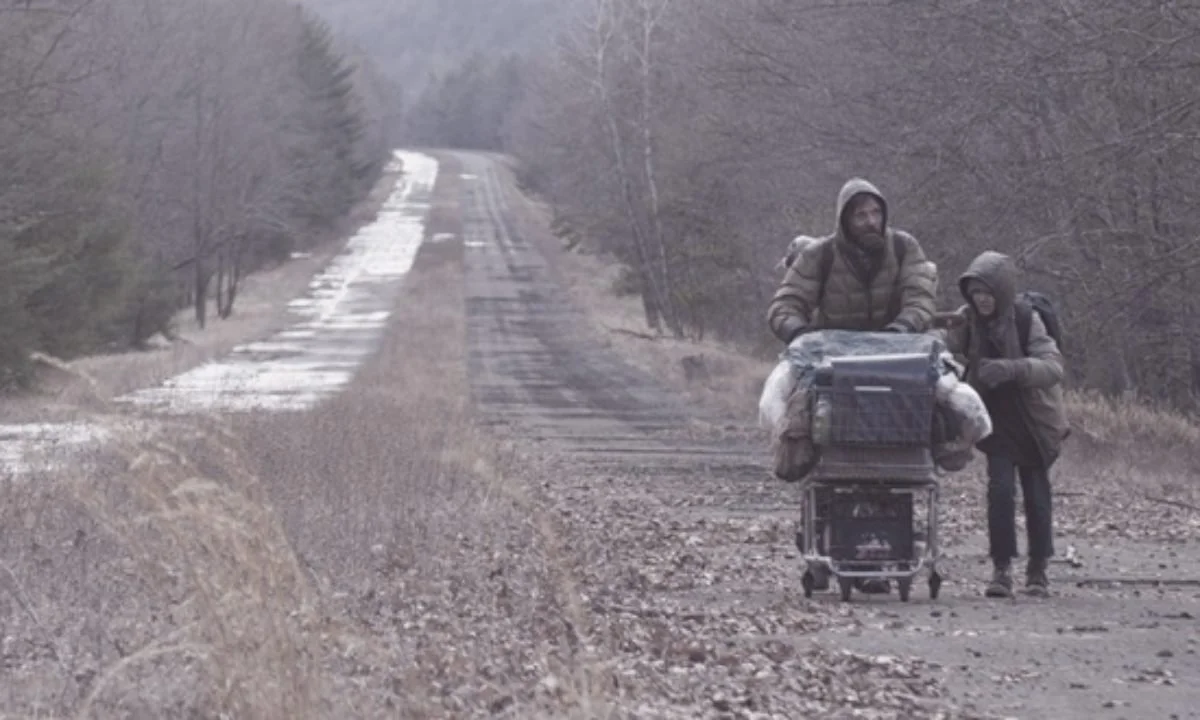
This picture pretty much depicts the gray nature of McCarthy’s writing - drab and dismal.
For me, the writing style was painful. McCarthy’s prose is Spartan and fragmented, which adds to the overall unsettling nature of the book. There are no chapter breaks; it feels like one long stream of consciousness. But what was the most difficult to parse was the lack of quotation marks in the dialogue. It was challenging at first, forcing me to slow way down and sit with each moment, making those moments even more poignant. This method also seemed to become more and more effective as the novel progresses. McCarthy manipulates emotion with the amount of dialogue that he uses as well. The silence between dialogue sets echoes the emptiness of the landscape and emphasizes how little comfort language itself can provide in such a bleak setting.
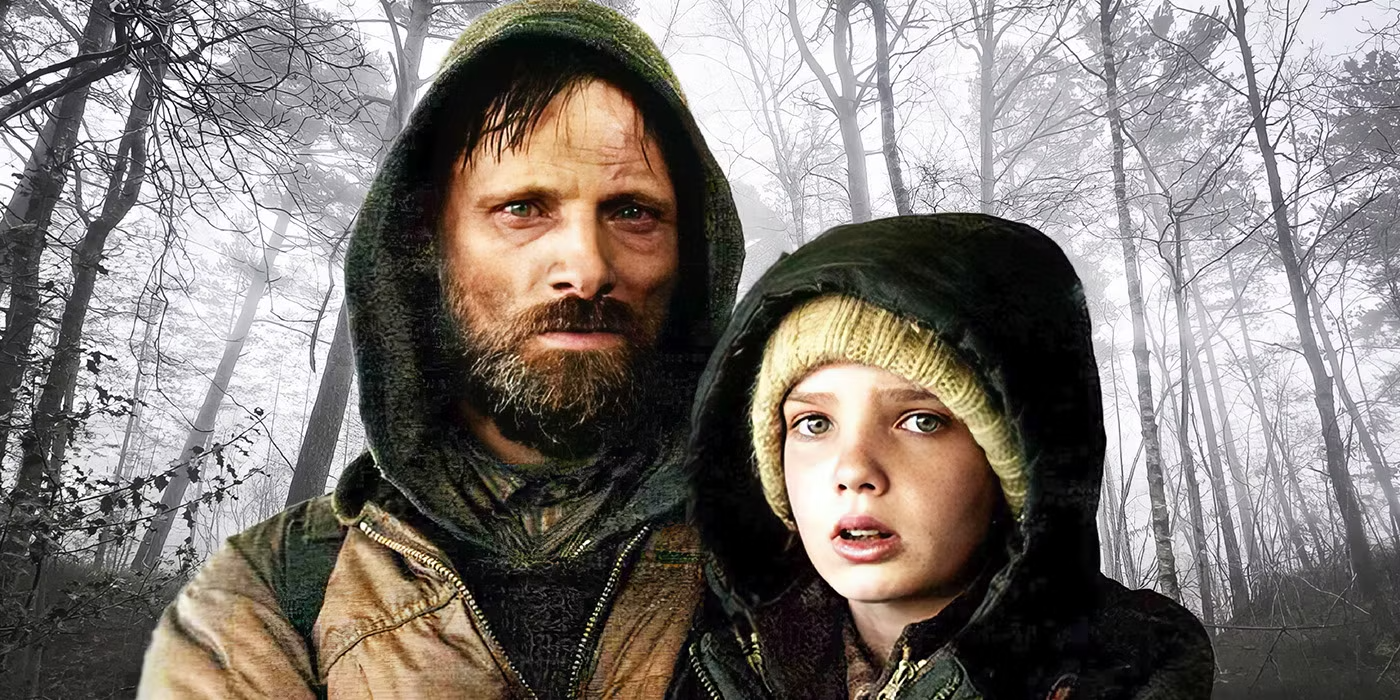
At the heart of the story is the relationship between the father and the son, which provides the book’s emotional core. Fiercely protective, the father will stop at nothing to keep his son safe. The boy is all about compassion, innocence, and morality. The phrase, “carrying the fire,” came to represent the preservation of humanity and ethics - the values that were prized before the apocalypse. This resonates with me. As a father, one of my primary responsibilities is to protect my family, and this book had me pondering how far I would be willing to go to ensure their safety. Would I be willing to forego my humanity to protect my sons? If survival necessitated cruelty, I think I would be on the side of the father. I assuage the guilt this causes me by telling myself I am just being as pragmatic as the father in the story. His pragmatism and the boy’s empathy created difficult questions about what being “good” meant in their broken world.
The dichotomy that hinges on “carrying the fire,” while clearly the main point of the story, was not enough to keep me from wondering over and over about what destroyed the planet. There were pretty significant hints along the way. McCarthy wrote about the ever-present ash that covered everything, and it got me thinking about what would cause that. I considered nuclear war, whose holocaust would cause a nuclear winter that would fit with many of the planet’s symptoms, but radiation was an issue that was never spoken of. Meteor striking Earth? Maybe a super volcano exploding? Both of these would leave ash covering the land for thousands of miles. This ash would destroy plant life as well as block the sun, which would account for the cold temperatures that father and son were constantly battling and the lack of plant life. I went online and discovered that I was not the only one who was asking these questions, but unfortunately, no one had any answers that were better than mine.
McCarthy doesn’t fear exploring the baser side of humanity by examining what people will do when they are afraid, isolated, and with the world in total moral collapse. When push comes to shove, people are capable of truly horrifying acts. If you and your family are about to die of hunger, cannibalism becomes acceptable. One of the worst scenes is when father and son find a basement filled with people who are kept in chains, missing various body parts that have been cut off, cooked, and eaten. With all that being said, the story is never allowed to be totally hopeless. Along the way, small acts of kindness, trust, and the loving bond between father and son demonstrate that goodness can exist even while society has devolved. This up and down between goodness and hope is what kept me engaged, willing to process the depths of depravity and keep reading.
On the Road is no walk in the park, but it does leave a mark. It forced me to question what I would do were I in that situation - where would I stand regarding my morals and ethics if the concept of just getting through the day was where my focus lay? It left me thinking that no matter what happens in life, some things are worth “carrying the fire.” Love of family and the ideals of right versus wrong are to be protected no matter the cost.
It was with mixed emotions that I finished the book - McCarthy adroitly weaves a tale that is a marathon of distress and anguish that I was happy to finish in some ways, yet a beacon of perseverance and hope in others. It is still something I think about.