This is a deep dive
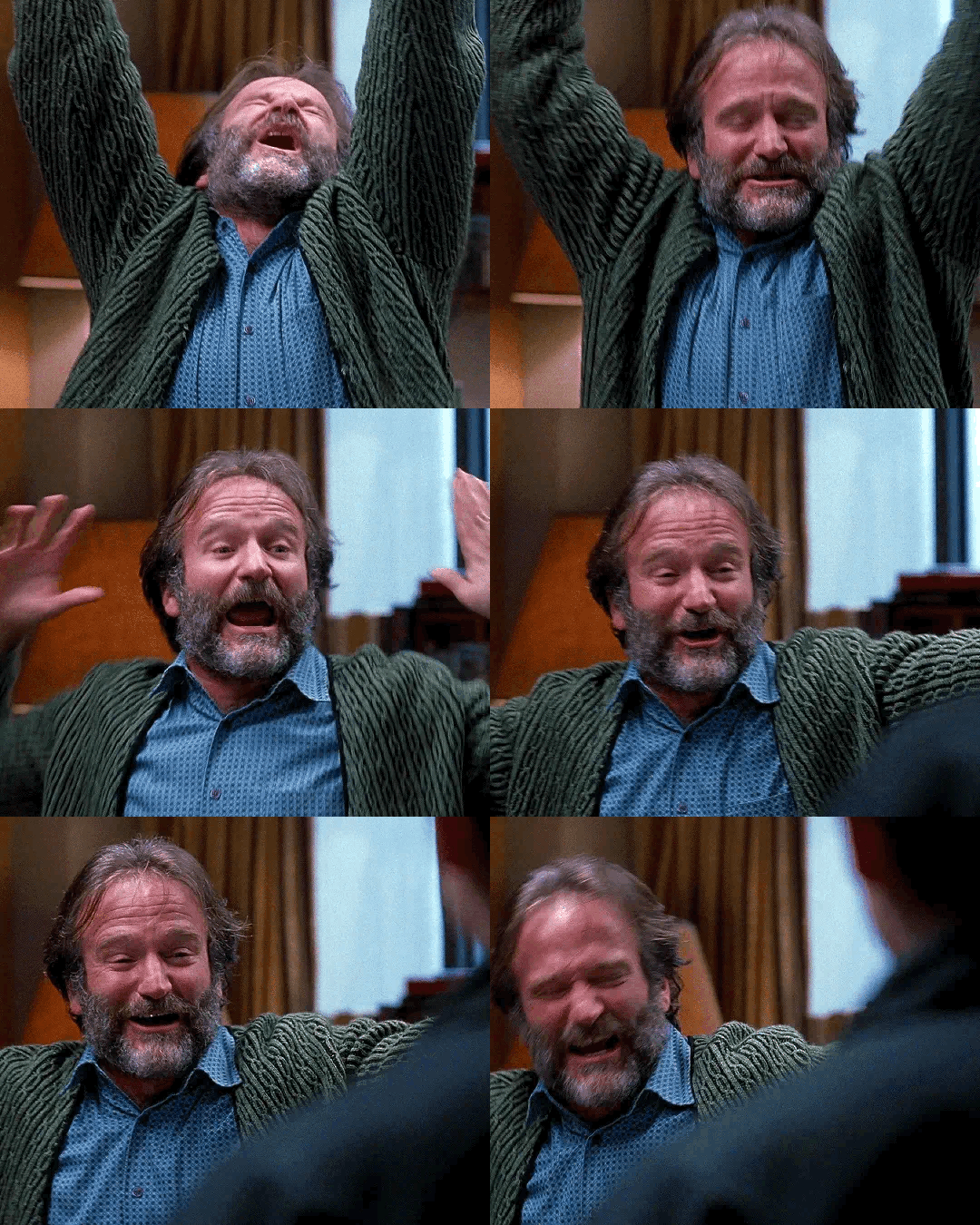
Recently my Film as Literature class watched Good Will Hunting. If you haven’t seen it, man you are missing a good one. It has some of the best writing and character arcs that I can think of. That plus an amazing performance by the late Robin Williams (Academy Award for Best Supporting Actor 1998) and the explosive arrival of Matt Damon and to a lesser extent Ben Affleck, it tells an amazing story of recovery and self-discovery.
What this post is about, however, is a response to a scene where Will, played by Matt Damon, argues and eventually breaks up with this girlfriend Skylar, played by Minnie Driver. In it he becomes very angry and displays some violent tendencies by punching a wall and basically losing his crap. Students vehemently dismissed Will as just another bad guy and that Skylar was better off. Tough to argue with really. I told them that if a significant other treats then that way, they should bail. Done and done.
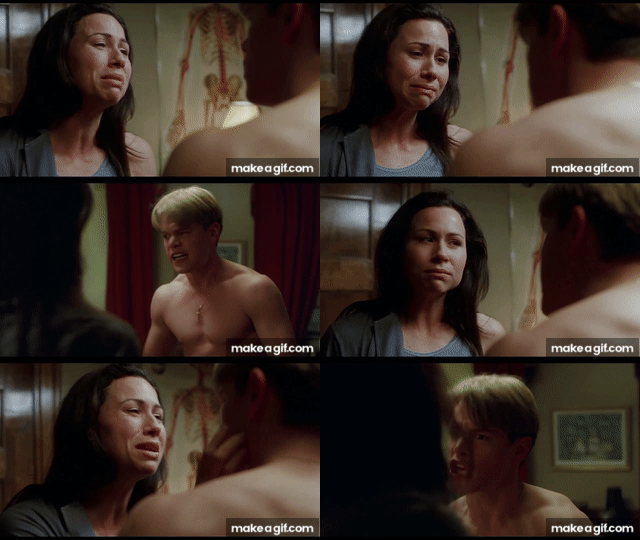
This case is very nuanced. I always say that the ‘what’ of a situation is very easy to see, but the ‘why’ is always more nuanced and complex - it takes some work to get to the bottom of. Note: I am not letting Will off the hook; he/we are responsible for our/his actions and the inevitable consequences which follow. I just wanted to take a longer look at his why.
This look started with a book by John Yorke entitled Into the Woods. It talked about the manner in which writers create characters with foibles and the way in which they make them feel real and relatable (eventually) to audiences. It starts with your hero/protagonist have a real issue that they are totally unaware of, usually brought on by trauma (AKA - The Wound) and that initially they are totally blind to it. The story that takes us on a journey where a veritable army of people help them see the problem and deal with it. I did not purchase or read the book, I was able to find enough excerpts from it that I was able to, along with other websites, put together some thoughts on how what he wrote applies to the character of Will Hunting.

I read and watched and wrote. And wrote. And wrote. Before long I had a 3 page document. that I know my students would attempt (and probably succeed) to lynch me if delivered a lecture/discussion covering all of it. But I wanted them to have the information - so I made a video that went nicely along with the document. The document is below along with the video if you want to go down this rabbit hole with me.
If you don’t really want to read this treatise on my ideas of psychology and Will Hunting, you can also watch the video that I made that represents some of the concepts that Yorke talks about and assimilated into a much easier to digest package - maybe.
Oestreich
FAL
Good Will Hunting
Will’s defense mechanisms and emotional catharsis
Into the Woods - by John Yorke
"...story matches psychological theory: characters are taking on a journey to acknowledge and assimilate the traumas in their past.
By confronting and coming to terms with the cause of their traumas they can finally move on."
How do characters use defense mechanisms to protect themselves?
How are supporting characters designed to help weaken those defenses?
How do these elements work together to create a powerful catharsis for characters and audience?
The Defense Mechanism
stories with a positive change arc, the protagonist starts with a weakness
a lie they believe about themselves or the world that they will have to overcome
weakness is usually rooted in some past trauma
often referred to as 'The Wound'
In GWH, Will's wound is his awful childhood - terrible abuse at the hands of his foster father
Wills wound/weakness - the belief that stepping out of his comfort zone will lead to emotional pain.
weaknesses become behavior through defense mechanisms
Yorke "...ego defense mechanisms are the masks characters wear to hide their inner selves; they are the part of the character we meet when we first join a story, that part that will -- if the archetype is correct -- slough away."
We see in Will's first therapy session his fear of exposing his wound results in his defense mechanism - mocking the whole reason they are there
When the session begins, he doesn't look at Sean, and seems more interested in the room
When Sean tries to connect with him, he changes the subject, talking about the books.
Here he is flexing his intellect trying to intimidate and making Sean feel small.
None of this affects Sean, who can keep up with Will and parry his smart ass quips.
Bit about lifting
So will looks for a new tactic, one that might hurt Sean directly
Analyzes his painting which finds Sean going after Will and Will being helpless
This scene paints a clear picture of how will uses his defense mechanisms to avoid dealing with uncomfortable situations
Yorke "The key to writing a good defense mechanism is that the characters themselves are completely unaware that they are exhibiting defensive behaviors...the other characters in the film and the viewers in the audience watch the heroes and become frustrated with their obliviousness to their own glaring problems."
Will's biggest issue is that he is not aware of these defense mechanisms and it will take small army or characters to: Wear down the Protagonist's Defenses.
Lambeau notices his genius and tries to set him up with great jobs.
Skylar is unlike any girl he has ever met
But to pursue these opportunities Will would have to leave his comfort zone and take risks -- which is what he is most terrified of doing.
- so he unconsciously uses defense mechanisms to justify his inaction
Consider the way he turns down the job as well as how he breaks things off with Skylar
- they are both worst case scenarios
Rationalization - explaining his decision(s) in a seemingly logical manner to avoid the emotion behind it.
Sean, "You're always afraid to take the first step because all you see is every negative thing 10 miles down the road."
- when Sean asks Will to tell him what he wants to do, he is showing Will the truth that he is hiding from.
Skylar - asks him to go to California
- Will once again jumps to the worst case scenario; that they could be in California next week and Skylar could be done with Will and he would have nowhere to go.
- Skylar doesn't allow him to rationalize his refusal and calls him out on the real issue: "You're afraid that I won't love you back. You know what? I'm afraid too. But @#$% it, I want to give it a shot and at least I am honest with you."
- Skylar forces Will to see the truth he is hiding from - but Will isn't ready to change yet, so he uses an even harsher mix of defense mechanisms are triggered.
- When Will looks her dead in the eye and tells her he doesn't love her - it is a small-scale form of regression returning him to an earlier safe state -- before he was in an emotionally challenging relationship with Skylar.
- when Will wasn't with Skylar he didn't have to be emotionally vulnerable and that is far easier than dealing with risks and how he is actually feeling.
Regression is one of the biggest ways that Will avoids leaving his comfort zone - his friends
- They are immature, yet fiercely loyal and provide Will a place where he is never going to be challenged or have to grow up.
- Will convinces himself that it is okay to sacrifice job opportunities and relationships because he will always have a home with his friends.
But Will is in denial about what he really wants
In steps Chuckie - his closest friend in the world, and calls him out on his BS
- Chuckie forces Will to see the truth he is hiding from
Turning point in the film - Will realizes the only person keeping him from moving forward is himself
Will lowers defenses, but not yet - No meaningful change has occurred bc that requires catharsis.
Catharsis

The dents that have been made in Will's emotional armor throughout the film -in the films climactic scene, Will finally releases his repressed emotions.
- Will realizes that Sean has his file detailing all of his physical abuse
- they commiserate about their painful childhoods
- Sean looks for a way to get through to Will.
"It's not your fault"
As Sean repeats this phrase, Will goes through his arsenal of defenses:
- makes light of it
- then he claims that he has gotten the message, hoping Sean will stop
- finally Will turns to aggression
Through their time together, Sean has learned all of Will's defense mechanisms and refuses to let him escape the situation until all of Will's walls are torn down.
- Sean takes Will in his arms and holds him like a child
- 2 lonely souls being father and son together
The events of the plot have brought Will to a place where he experiences a psychological catharsis - and when we went on the journey with him, the audience experiences a dramatic catharsis.
Good stories draw us into their world and make us empathize with the struggles of the characters.
We witness their inner conflict as they avoid the very thing that will make them whole, oftentimes recognizing that same behavior in ourselves.
We root for the cast of characters around them and hope that they can help show our hero the truth that they are hiding from.
If the story is written and executed just right, we also experience a much needed catharsis.