Short films that stimulate
There's something inside Benjamin's briefcase.
Directed by Josh Soskin
Cinematography: Rob Hauer
Producer: Grace Jackson/ Houseblend Media
Editors: Josh Soskin, Bennett Barbakow, Matt Sultan
Music by: Huma-Huma
Starring: Gerrit Wellens
Co-Starring: Fran Phillips, Alicia De Leon, Mat Scollon, Alex Lamar, Anne Alexander
Production Designer: Adri Siriwat
1st AD: Ian J Putnam
2nd AD; Chuck Bennett
1st AC: Alicia Varela
2nd AC: Daniel Worlock
Key Grip: Brian Deutch
Gaffer: Julien Janigo
Sound: Justin Gay
Wardrobe: Sarah Fox, Sarah Horton
SFX: Resolution LA
PAs: Mico Pulice, Kevin Rojas, Sebastian Lee
Special Thanks: Mofilm, Station Film, Culver Casting, Resolution LA, Shane Liem Casting
This is one of my very favorite short films. I show this video on one of the very first days to my video productions class students. I do this for many reasons.
One, there are no special effects. The cinematography is really simple - those are all shots that they could pull off. Students should be motivated in such a way that they are capable of a video just like this.
Two, the acting is really no big deal. This is not to say the performances were not great, but they were very limited. “You got the juice” = Not a tough line to deliver. As the students are also many times the actors in their own films, this is no barrier to entry.
Three, there was no real background for the characters. There was no world building. In fact, the plot line is really limited. And most importantly, the video is not tied up in a nice bow at the end to provide closure for everyone. This allows viewers to create whatever closure they like, which is great. (The fact that almost all feature films are tied together at the end is really annoying to me.)
Four, it is very compelling and engaging. The change is background music, the plainness of the actors, the relatability - I don’t know exactly, but there is no doubt that it is a fun video and very few people bail on it prior to ending.
Anyway, this is how video productions class starts. I would love to be a part of a video like this. I think it is a great example of how a simple idea executed well can be a great short.
Per Wikipedia:
Penny dreadfuls were cheap popular serial literature produced during the 19th century in the United Kingdom. The pejorative term is roughly interchangeable with penny horrible, penny awful, and penny blood. The term typically referred to a story published in weekly parts of 8 to 16 pages, each costing one penny.[3] The subject matter of these stories was typically sensational, focusing on the exploits of detectives, criminals, or supernatural entities. First published in the 1830s, penny dreadfuls featured characters such as Sweeney Todd, Dick Turpin, Varney the Vampire, and Spring-heeled Jack.
Penny Dreadful is a fantastic video. There are some known actors in it as well. David H. Stevens plays Dennis and is the protagonist. (Kind of) With Marnie Schulenburg who played Holly really well, and is unfortunatley deceased. When she discusses her ‘feminie wiles’ was a high point for her. Oona Laurence who is not named in the short and is only credited as ‘Little Girl’ absolutely steals every scene she is in. I cannot believe she has not had more of a career. She has played the same ‘lilttle girl’ in most of the movies and shows she has been in. I have to imagine she is trying to break in as not the ‘little girl’ but according to IMDB she has not managed to do that yet.
Great, great short. I laughed out loud at many parts of this short.
Rules for Takeaway Scenes:
Scenes must be filmed in a single continuous take. No cuts. Film lights are prohibited. Only natural lighting or practicals allowed. There will never be credits for anyone involved. Participants will never publicly reveal or acknowledge their own involvement with a scene, or release any information that would reveal anyone else’s involvement with the Takeaway Scenes project.
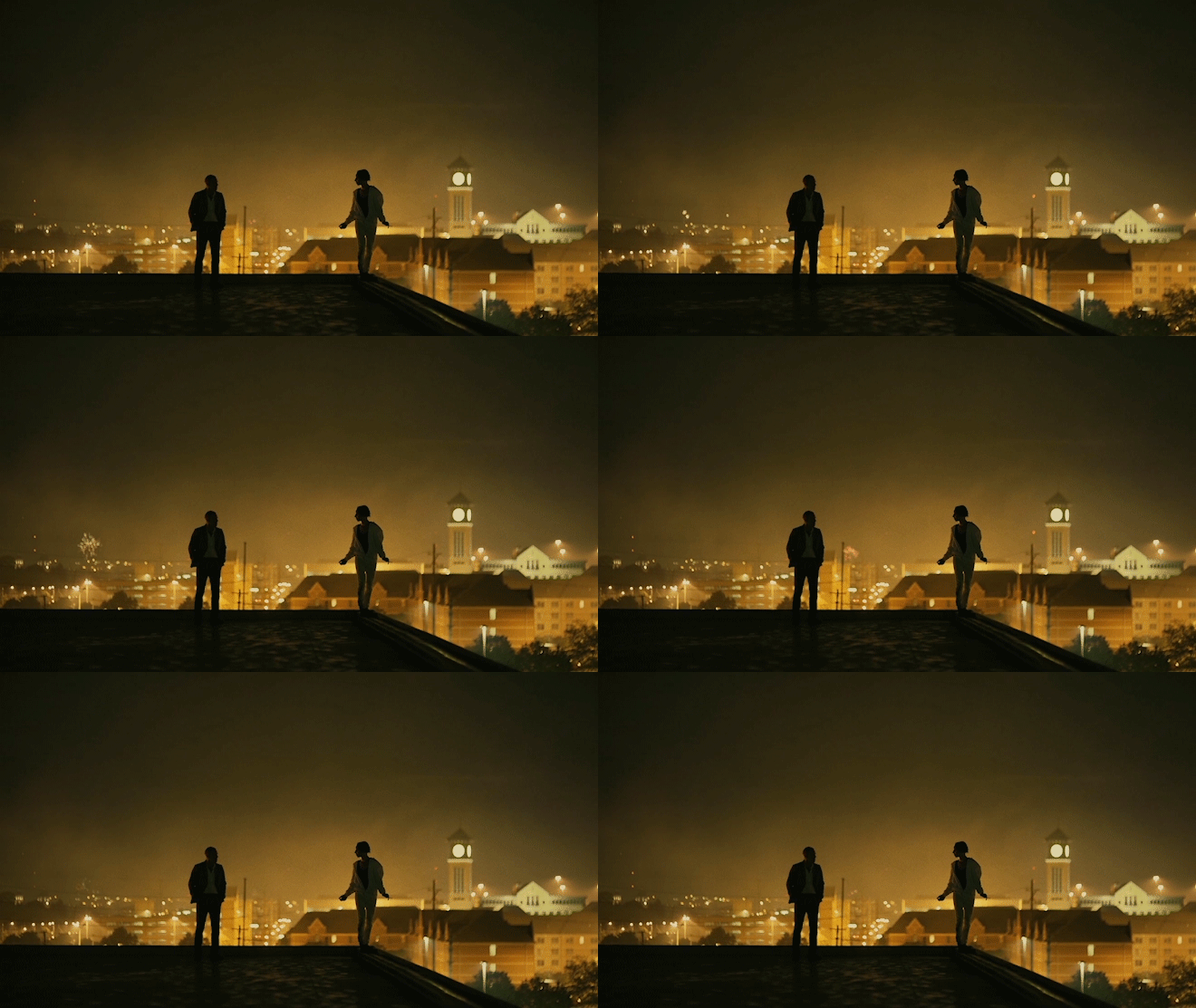
These are some of the coolest videos I have ever watched. Jumpers is easily my favorite, but its not as if the others ones are not cool. Teapot is a really, really good video too. But lets look at Jumpers first.
The scene is shot entirely on a rooftop. And it was a really tense scene about 2 people who were discussing a helluva hard series of topics. No spoilers here, but it is amazing.
Am I a prepper?
Strap in - this one rambles more than that average post.

Yep, this is what I am talking about today. How did this come up one might ask — I don’t know the answer to that, but I am going to take a look at this concept and whether or not I am going to go build out a pit in my basement.

"It puts the lotion on it's skin or else it gets the hose again..."
I am not talking about this kind of pit in the basement - just FYI
First, lets address the issue of a catastrophic disaster occurring. What kind of disaster? I do not think you have to look too far to see that our country could be coming apart at the seams…perhaps a sequel to 1860-1864? That option is not as fun to talk about as it seems very plausible.
I think when things go pear-shaped it is only a matter of time before people begin to attempt to screw over other people - i.e. take their things and basically act like a pirate. This will happen faster when it is one group of people and their ideologies battling another group of people and their ideologies. If it was humanity versus a zombie apocalypse or the rise of Skynet, we would maybe stay together longer. Blue versus Red? At one another’s throats almost immediately.

Zombie apocalypse - easier. Zombies are not very smart as they are not self-aware. Their instinct is to eat brains or whatever. Moan and shamble off together. While they do pose a significant problem, especially in large groups, I feel as though they are lower on the ‘Oh no, we’re all going to die’ scale. One needs only to look at AMC’s The Walking Dead to get ideas for survival. (I am all about the RV - just saying) (oh - and getting a sword; vital piece of kit.

Skynet or the Rise of the Machines. All you have to do is think about how Siri or Alexa is always listening and some of the creepy stories about how it responds sometimes out of nowhere without being prompted and you realize that we are only steps away from a Terminator showing up at your door and asking if you are Sarah Connor. I find the concept of the robot uprising to be way higher on the ‘Oh no, we’re all going to die’ scale. I mean, they are self-aware which puts them ahead of zombies. Couple that with the analytical ability of an AI and the utter lack of emotions and we have death machines that are capable of out-thinking and out-everythinging us. Humanity better stay together a long time on this one, because Neo is not coming to save us.

Meteorite or comet impact. This one is easier and more difficult simultaneously. I mean the average person has zero ability to alter what might happen. It will be all about governments attempting to blow the thing up, etc. Stop singing I don’t want to miss a thing right now because Ben Affleck is not coming to save you. This one seems more like a clock ticking with no recourse. But once people realize that they only have X amount of time left, society probably begins to break down. Idiocracy anyone?
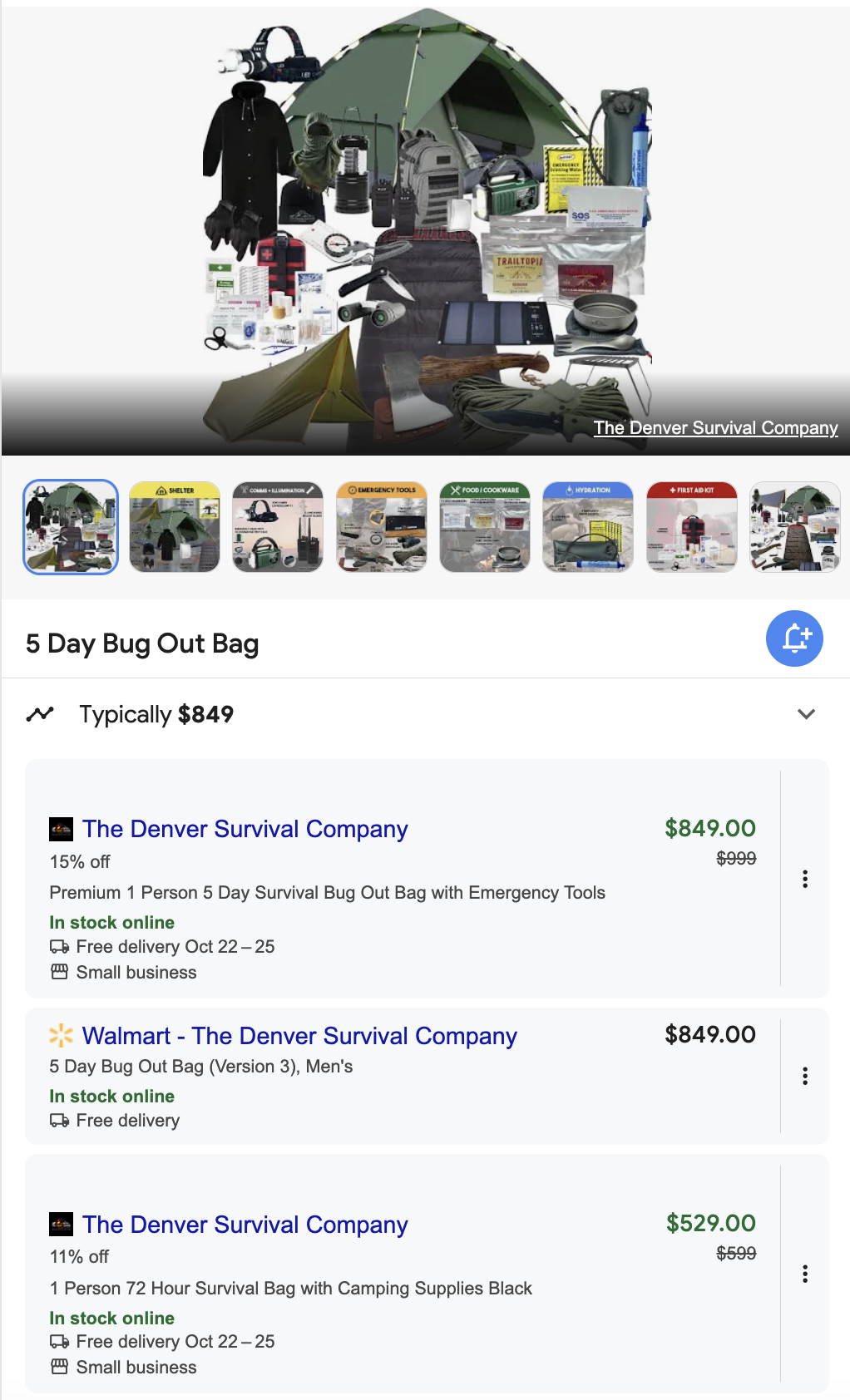
I did not think they would be this easy to find, but google ‘prepping bag’ and lots of options appear. So if you do not want to do any of your own thinking, check out the picture to the left.
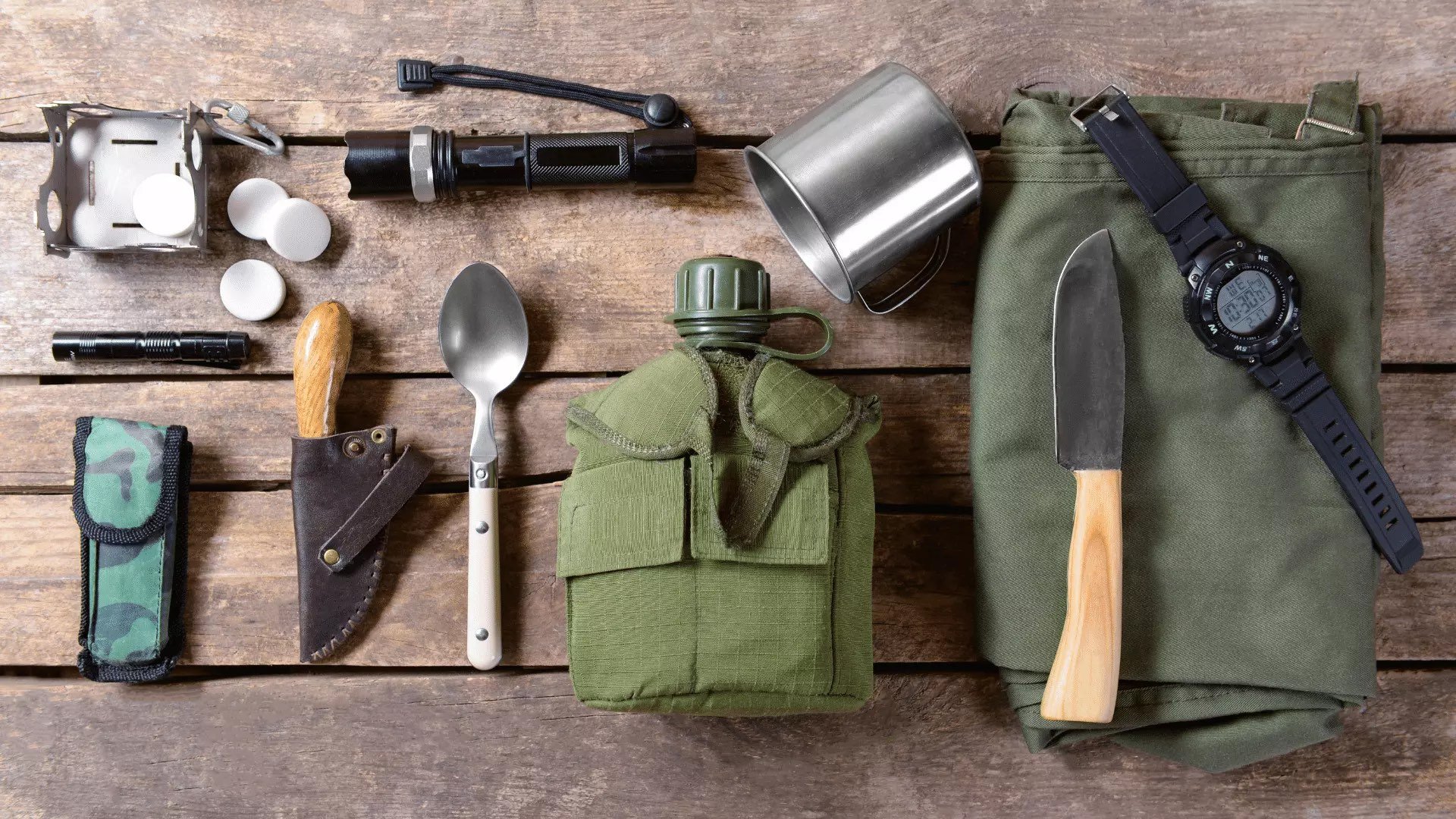
Since I apparently am a DIYer when it comes to ‘bug out bags’ here is my list of items:
Tent - need a place to get out of the rain. Easy choice.
Windup radio - these are critical to finding out where the zombies are. Not as critical if the robots attack based on the fact that they would take over all thechnology. Could not trust a radio broadcast to be factual. Some of these radios also double as chargeable batteries intended to recharge other items such as phone or walkie-talkie.
Flashlight - duh.
Envelope with all important documents - birth certificates, etc.
Firearms - I would be satisfied with some manner of AR and a Glock 19.
Kabar knife - good enough for USMC, good enough for me.
Clothes - several changes.
Hygiene products - gotta brush your teeth at least some.
MREs/H2O - this is troublesome as it is bulky and heavy. Perhaps a water filter would be better.
Bible - going to need to keep your spirits up and whats better?
Yes this is crazy, but is it crazy enough? This concept can come across as completely nuts and then after some thought seem existentially valuable. I do not know if I will ever have one, a prepper bag that is, but the worry is that planning ahead and not needing seems much better than being in need of one and not having one.
What would you put in your bag? What am I missing? What is ridiculous and needs to go?

Halloween short film? Maybe.
I have been thinking about doing this short for a long time. Horror movies are a niche — they do not get a lot of love. Not from production companies, (they do not give them big budgets) they do not get A-list actors, (lots of little experience/first timers) and they do not get premium advertising. But man is it weird that so many people love them.
I still think that The Exorcist is one of the scariest movies I have ever seen. Nightmare on Elm Street also caused me issues for a long time growing up. When is the hardest time to have an imagination and remember scary movies? Thats right — before you go to sleep. Oh yeah, and thats where Freddy is. Those were some scary times, some don’t turn the lights off times.
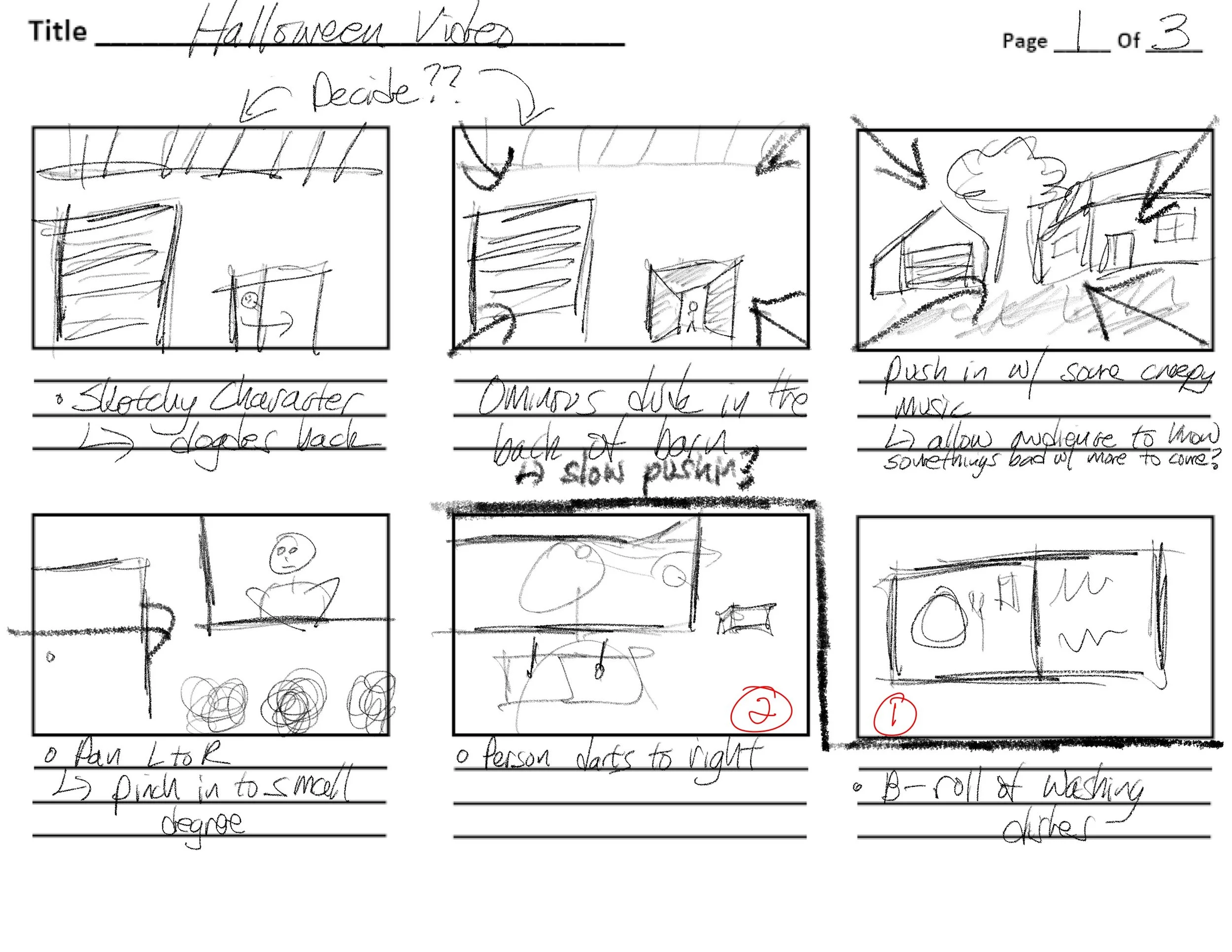
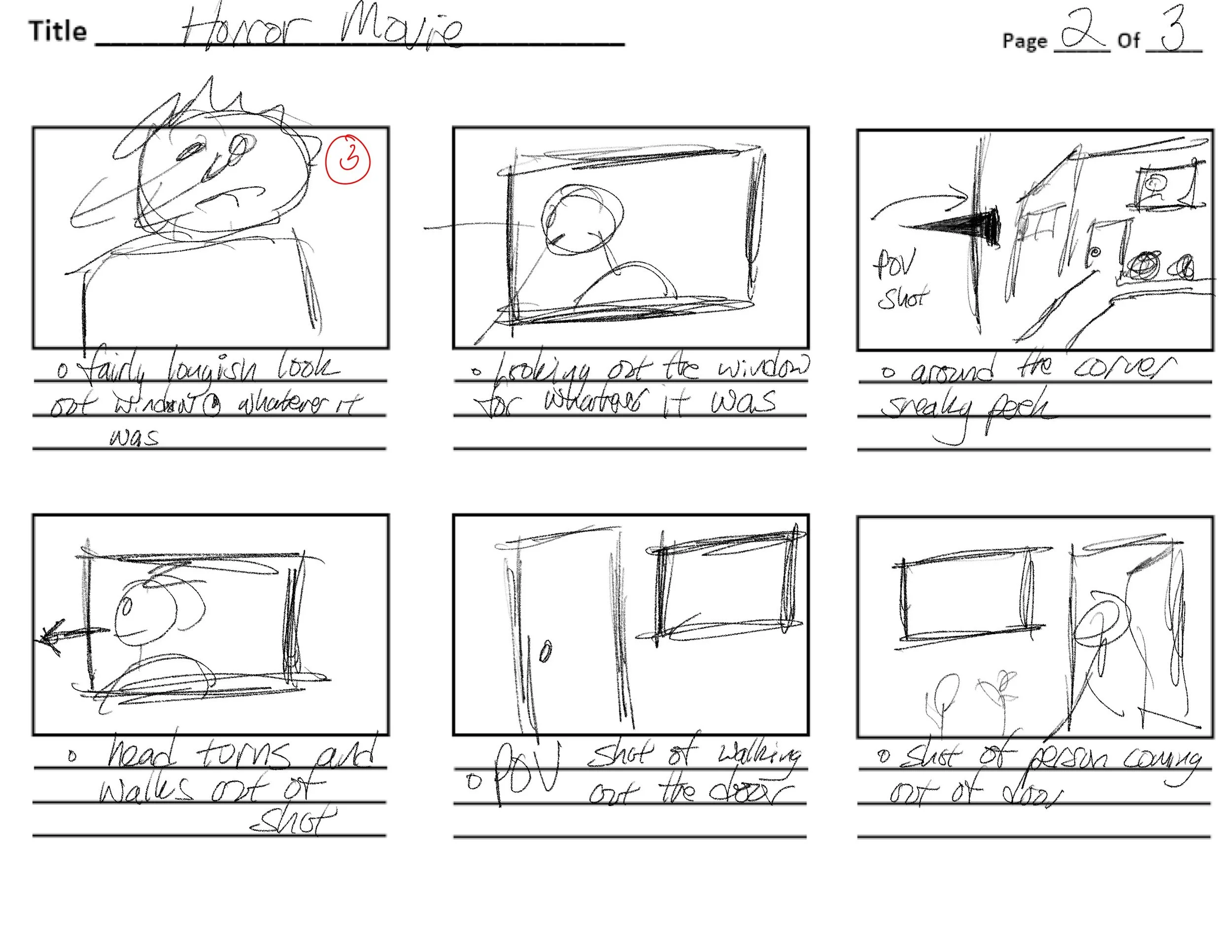
So anyway - I think I am going to take a shot at filming this short that has been going through my head over and over — maybe over fall break, we’ll see. Here are 3 pages of my storyboard. Undoubtedly it will be tough to follow, but its just a draft and a place where some ideas and shots are on paper.
Enjoy! And students — I am sure you will give me your opinions; I stand ready.

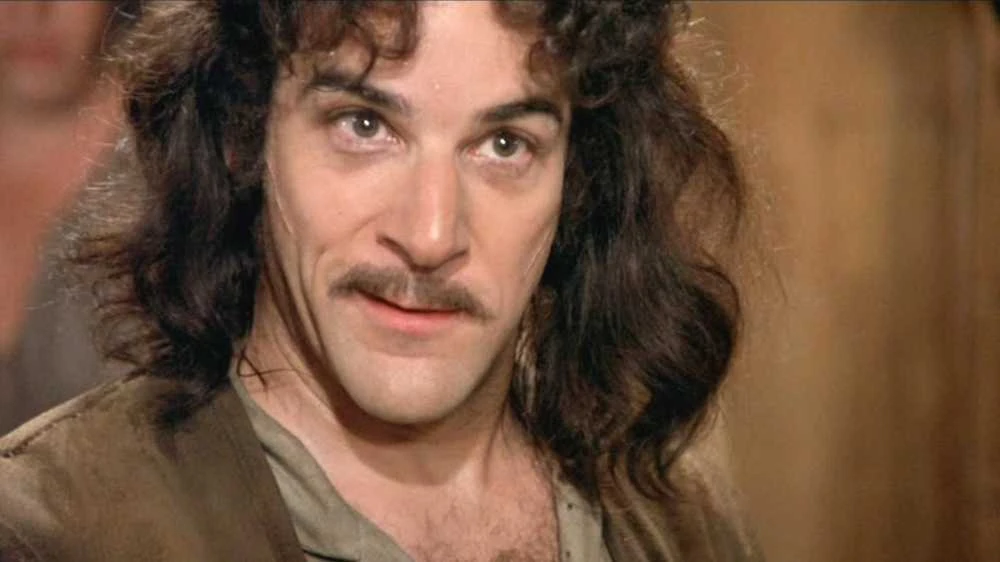
My name is Inigo Montoya.

Today is Friday, another week closer to Fall Break. But this is not to say it was a bad week. In Film as Literature class we have been studying comedy, so naturally it was a perfect moment to bring out one of the greatest films of all time. The Princess Bride (1987) has been and will likely remain one of my favorite movies. It is an hour and 38 minutes of awesome - eminently quotable and simply a fantastic movie. The movie almost did not get made. The movie was based on William Goldman's novel The Princess Bride, which was considered too quirky to be made into a film for over a decade. Goldman himself had doubts about ever seeing his book on screen, but Rob Reiner's dedication brought it to life. Thank goodness for Rob Reiner.
While I knew a lot about the movie - I have watched it sooo many times - there were some things that I found out while I was researching it. I was trying to decide whether or not I wanted to do a deep dive, but settled on just some bullet points of cool stuff.
Cary Elwes broke his toe while riding around on Andre the Giant’s ATV - the scene where he confronts Humperdinck he is actually in considerable pain.
Andre the Giant was capable of some amazing feats. He could eat 12 steaks and 15 lobster in one sitting. 6 plates of eggs was a breakfast. And the man could drink! It was said that 7000 calories a day from alcohol was not uncommon. There were 2 reports about beer: One was that he drank 156 beers in one evening. The other was that he drank 102 beers in 45 minutes before a flight.
The epic duel between Westley and Inigo Montoya is one of the most famous sword fights in movie history. It took months of training for Cary Elwes and Mandy Patinkin to perfect the choreography, and they performed most of it themselves without stunt doubles.
Patinkin says random people say the line, “My name is Inigo Montoya…” to him at least 3 times a day.
Billy Crystal, who played Miracle Max, improvised much of his hilarious dialogue. In fact, he was so funny during his scenes that co-stars couldn’t stop laughing.
Rob Reiner, the film’s director, has a cameo you can’t see but can hear. He voices the “clergyman” at the wedding scene, who delivers the iconic “Mawwage” speech.
Back to school. I thought of some of the people I know that are huge fans of the movie and I want to see how they might do on my short essay test. The questions are below:
Select 3 of the following and answer as completely as possible:
Here are six thematic essay questions based on The Princess Bride:
The Nature of True Love: How does The Princess Bride portray the concept of true love? Discuss how the relationship between Westley and Buttercup reflects or challenges traditional notions of love in fairy tales.
The Role of Storytelling: How does the framing device of a grandfather reading a story to his grandson shape the narrative of The Princess Bride? Discuss how the film comments on the power and importance of storytelling.
Heroism and its Many Forms: What does The Princess Bride suggest about heroism through characters like Westley, Inigo Montoya, and Fezzik? How does the film subvert or uphold classic heroic tropes?
Revenge and Forgiveness: Inigo Montoya’s quest for vengeance is a central subplot. How does the film explore the theme of revenge? Does it suggest that vengeance brings satisfaction, or does it complicate the idea?
Fate vs. Free Will: Throughout The Princess Bride, characters seem to struggle between destiny and their own choices. How does the film navigate the tension between fate and free will, particularly in Westley’s journey?
The Nature of Villainy: How are the villains—Prince Humperdinck, Count Rugen, and Vizzini—depicted in The Princess Bride? What does the film suggest about the nature of evil, and how does humor play a role in its portrayal?
Answer a question or questions below in the message field. Lets see what you got!


Barbarian Days.

Recently my father in law and I were talking about books. He has been trying to get me to read the Gray Man series as he gave me several of that serie’s books. Problem was he did not give me the first book in the series and I didn’t want to just go jump into a long series of book starting with book 3. So I started looking for where I could get the first one. Library was a no-go; they did not have it. Examined Half Price Books and they had it, but the shipping and handling costs were greater than the cost of the book. That was irritating. Then I heard about Thriftbooks - also from my father in law. Great prices as long as you are willing to be patient as the shipping times can be long. I bought the first book of Gray Man and also took a chance on the book Barbarian Days - A Surfing Life. It was a Pulitzer Prize winner so I figure it couldn’t be all that bad.
Turned out it was…well, an okay decision. Barbarian Days: A Surfing Life by William Finnegan is a memoir that delves deeply into several key themes, beyond just the act of surfing itself, but there was plenty of surfing talk; be assured of that. It was very apparent that the author was taking us on a autobiographical journey. In fact, at many times it seemed to me to be a vehicle for a personal catharsis.
Throughout the memoir, Finnegan explores how surfing has shaped his identity and personal growth. Surfing is not merely a hobby for him; it’s a way of life that influences his understanding of himself, his relationships, and the world around him. The book portrays surfing as a spiritual journey that allows Finnegan to reflect on who he is as an individual.
The book begins detailing Finnegan’s early life. While it was apparent he was a member of a loving family, to say his life was without strife. It would seem that as a youngster he was constantly an the outside due to the frequent moves made by their family as they followed their work. (His father was a producer for some small scale television shows and movies). But it was due to one of these moves that Finnegan arrived in Hawaii.

William is in the back-middle.
In Hawaii, in between fighting with locals where he seemed to learn about the hard knocks of life while being beaten up pretty regularly, he started surfing. He was only a short walk away from a beach which had good breaks so he was there learning about surfing every day.
One of the main points that I would like to make about this book is how much I learned about surfing. I was aware that it was a lot more than just getting a board and going out in the water. You do not just hop up on ride. There are a tremendous number of dangers that come with the sport. Finnegan details how he spent a long time learning by simply watching others as well as paying the closest of attention to the water and more importantly, what lied beneath it. Just because a great wave with a good great goes by does not mean you should try and catch it. If it rolls you and there happens to be a shallow spot of razor sharp coral, you could be in for a really bad day. The terms I learned: Lefts and Rights, eddies and tubes — it all took a good bit of time to understand (not that I entirely do now) what he was talking about. One of the things Finnegan wrote about being very afraid of was drowning when a series of waves could pin you underwater as you were waiting for a safe moment to come up and swim out. The waves took on a personality as he spoke of them. Waves are absolutely schizophrenic; one moment providing a ride that led to heart pounding excitement and awe, but could, without notice, place you in a life threatening situation where a single wrong move results in you being cut to shreds on coral and/or drowning.
It was during this bit of learning that I discovered that while you may think of surfers as they are represented in Hollywood, Jeff Spicoli comes to mind, they are incredibly observant and in tune with nature. I may sound like I am about to start chanting, (I’m not) but if you were not able to read the water and adapt to conditions you were not going to be a very good surfer and might end up on the wrong side of a wave pounding you into rocks.
“Well, I'll tell you, Stu, I did battle some humongous waves! But you know, just like I told the guy on ABC, "Danger is my business!" Jeff Spicoli

"All I need are some tasty waves, a cool buzz, and I'm fine." Jeff Spicoi - Fast Times at Ridgemont High
The beauty, power, and unpredictability of nature are central to the narrative. Finnegan’s descriptions of the ocean and the waves are poetic, reflecting a deep reverence for nature’s magnificence and danger. The ocean becomes a character in the book, embodying both serenity and raw, untamable power, and surfers must learn to respect and coexist with it.
The memoir highlights how the pursuit of surfing can become an all-consuming passion. When I think of myself at 12 years old, what was important to me, it is a blur of ever changing interests. Besides baseball, nothing really stuck. Finnegan writes about getting up before dawn (no way I was doing that) and heading out to the beach and surfing prior to going to school. That is a single-minded dedication that is not often seen in an adult, much less in an early adolescent. But it is here where you start to see and understand what surfing means to Finnegan. He went to school and did pretty well, but I think the education he received while out on the waves interacting with people far his senior in age and experience was more impactful than any classroom.
Surfing is both a solitary and social activity, and the memoir reflects this duality. Finnegan’s relationships with other surfers—rivalries, friendships, and shared experiences—are a major part of the narrative. The surfing community plays a significant role in shaping his experiences, providing camaraderie but also competition. The connection experienced through surfing gave Finnegan and his friends a common path to travel. The obsession was shared with a select few and it allowed for experiences that only those dedicated to surfing can understand.

When I think of the word ‘obsession’ it more often comes with negative connotation. This is up for discussion in this book as well. If every move you make centers on how it will allow you to do something, you might need to take a long moment to think about the macro impact of what you are doing.
Finnegan sacrifices conventional career paths, relationships, and a stable life to chase the perfect wave. His obsession often leads to tension between his love for surfing and the responsibilities and expectations of adult life.
One of the other big ideals that challenged the way I thought was the freedom of movement Finnegan experienced. I am a Gen Xer and we often speak of how we only came home when the streetlights came on. Our parents did not know where we were, what we were doing, and we all came out okay…blah, blah. But that is nothing compared to Finnegan. As was the custom, Americans backpacked Europe after college, but William was hopscotching across Europe with a lot of story being told as he was 17 years old in Turkey. In Turkey! I would be nervous to go there by myself today.
This was indicative of the rest of Finnegan’s young life. Finnegan's life was marked by a constant search for new waves and new places. His passion for surfing takes him to remote corners of the world—Fiji, Samoa, Madeira, and beyond—capturing the thrill of discovery and adventure. He would work jobs with the goal being to save enough money to go on surf trips. He worked for a year or two on a railroad, saved $5000 which at the time was a significant sum of money, and left for the South Pacific. This journey lasted several years and ended with teaching english in South Africa during the height of the Apartheid struggle.

This journey was of course a great deal about surfing, but there was a great deal of self-discovery taking place as well. He spoke of not know what he wanted in life and how aggravating it was when he would at times look up from surfing and consider whether or not he was wasting his time and his life.
While it was not the path I have chosen, I think it is an incredible life’s journey he went on. We need to lionize those who are willing to put everything aside to chase a passion. If he had not went on this journey, I believe he would not have lived as satisfying a life as he did. He became an excellent writer and I am not talking about this book. He would eventually take a job as a correspondent at the New York Times and would go to all kinds of war zones and dangerous places. I do not think he could have done all of these things without the life-lessons learned while traveling and chasing waves.

All in all, it was an okay read. There were times when I was so far down in the weeds reading about the intricacies of surfing it made my head spin. And sometimes I would turn pages without reading if I thought it was more of the same. However, the book did keep me wanting more. I always kept going because I wanted to see how this or that travel experience ended. As the book wound down, he spoke more and more about how his age was impacting his surfing. I felt for him because I knew what surfing meant to him and I couldn’t imagine him being without it. As Finnegan ages, he reflects on how his body and his relationship with surfing change. It is a meditation on aging, time, and the inevitability of change, with surfing becoming a metaphor for life’s constant flux. There is a bittersweet tone as he grapples with the realization that physical limits will eventually impede his ability to surf in the same way he did in his youth. No one defeats Father Time.
But he came to peace with it. Marriage and children have a tendency to take your attention, but he was still able to continue traveling, it just wasn’t only to surf. HIs wife and daughter became partners in his unending wanderlust and he seemed very much at peace by the end of his story.
If you are a fan of surfing - this book is for you. There is a ton of surfing lingo and details; sometimes it became too much and therefore boring to me. WIth that being said, FInnegan still has a knack for storytelling, this I cannot deny. His story made me question whether or not I chase my passions enough, or for that matter, what are my passions? I think there is something very noteworthy when someone knows exactly what they want and do whatever they have to do to get it.
