
Being ruthless sounds good, but its hard.
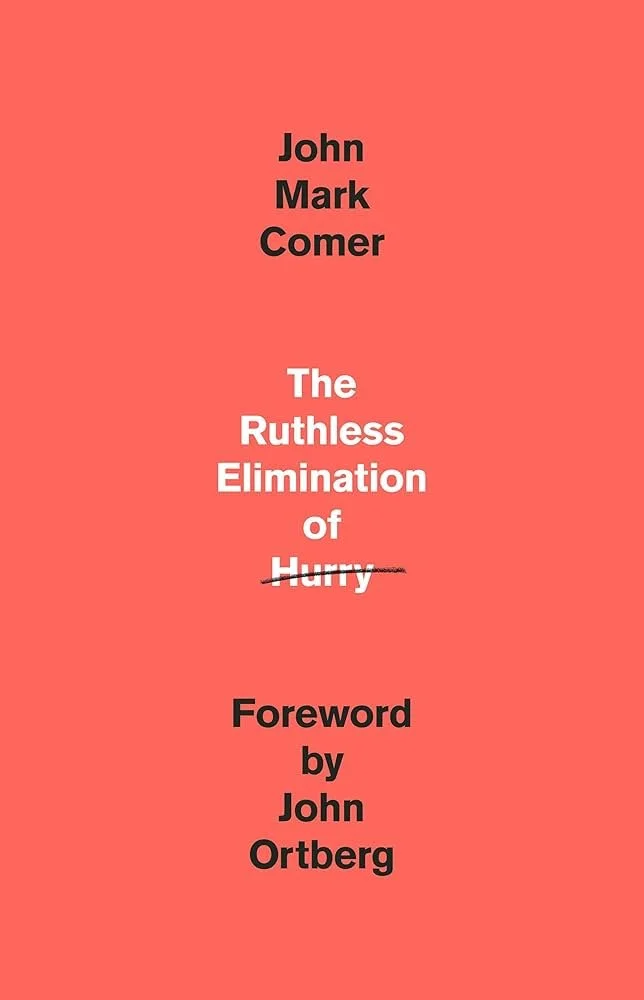
The Ruthless Elimination of Hurry is a nonfiction book that explores the benefits of slowing down your life to become more emotionally healthy, spiritually grounded, and present with others.
The central idea is that constant busyness isn’t just a scheduling problem — it’s a spiritual and psychological problem. Hurry quietly erodes joy, relationships, attention, and depth of thought. We don’t know how to live intentionally.
The book is about practical lifestyle advice and thoughtful reflections on faith, philosophy, and contemporary culture. It speaks of adopting habits such as rest, silence, simplicity, and intentional limits on technology, to create space for meaning rather than noise. These are things that a lot of us already know, but are so addicted to the world, we do not know how to shut it off.
In short, it speaks of a more thoughtful life in a world that rewards speed.
“Who is John Mark Comer?
John Mark Comer lives in Portland, Oregon and pastors Bridgetown Church, right in the center of the city. Bridgetown is built on the idea of practicing the way of Jesus together. John Mark has authored several books, including The Ruthless Elimination of Hurry and God Has a Name. John Mark said, “My life’s ambition is to be with Jesus, become like him, and do what he did. My prayer is that the stuff I make helps you do the same.””
The book starts with a personal turning point for the author. John Mark Comer was the lead pastor for several churches in Portland, Oregon, and goodness, were these churches growing. 1,000 new people a year for the better part of a decade. This sounds great, right? Thats a lot of new people learning about the good news of Jesus; that’s something that we are all about. The downside was that he found himself in a state of permanent exhaustion. Great anxiety and emotional fragmentation, despite outward success, led him to feel productive but hollow, crowded yet disconnected. As this madness came to a head, he sought help from a friend, John Ortberg, who had been mentored by Dallas Willard, who understood what he was going through. It came down to one word: hurry.
Hurry, in his case, was not a temporary malady; it had become his way of doing life. Not a minor inconvenience, but a destructive force that, if not destroying, was certainly undermining the truly important things: love, joy, peace, and spiritual depth.
How did this happen? Death by 1,000 cuts. Or maybe 2,617 - the number of times the average person touches their phone - taps, swipes, clicks - every day. (The higher end users are over 5,400). The really creepy part is that most of the leadership from social media companies sends their kids to schools where social media is not allowed - they know it is addictive and addictive by design. I knew a lot of these numbers, but I was appalled when I began to think about the opportunity cost of these amounts of time. Comer did not stop there. He talked about emails before going to bed, binge-watching TV shows (Landman, anyone?), and days upon days filled with meeting after meeting, which are superficial in nature and of little or no value. He was not fully there with his family. He was always in the middle of several text message discussions. He detailed an incredible frenetic life in a terribly frenetic way. His writing style was making me feel anxious. It was just so much, and I couldn’t imagine the amount of pressure he must have been under.
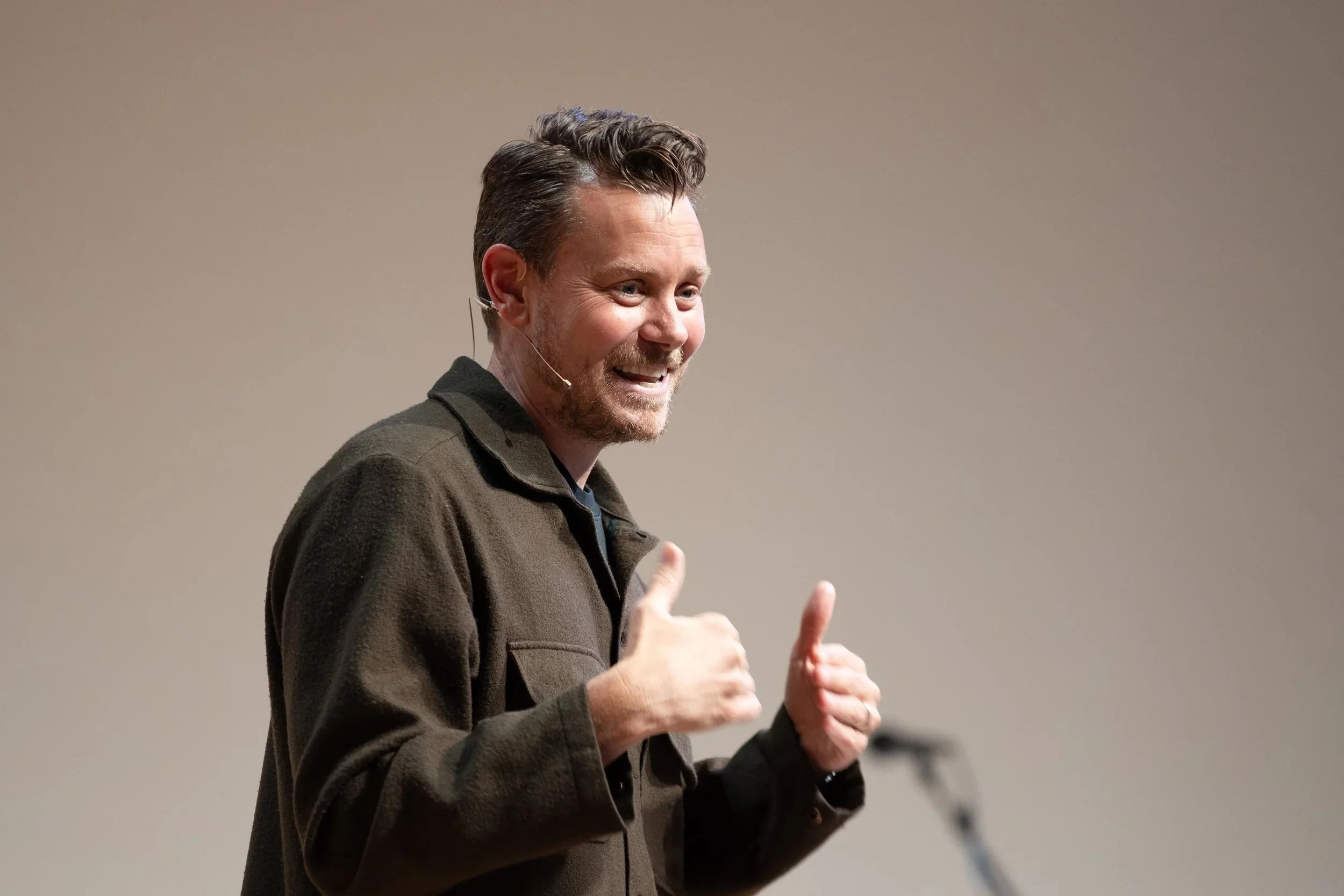
And then he stepped away. Decided to stop running several churches so that he could focus on just one. Stop being a mile wide and an inch deep and start paying attention to the things that really matter, deeply and intentionally.
He took flak for it. Some said he was not following God’s plan for his life. That he was selfish. I think that was an absurd notion, especially in light of the focus of why he slowed down: He wanted to be more like Jesus. Can you think of one single time that Jesus was in a hurry? I cannot. In fact, I can think of lots of times when Jesus might have hurried and did not. Oh, Lazarus is going to die? Jesus did not leave for 2 days. He. Did. Not. Hurry.
Essentially, the prologue sets up the book’s central thesis: A hurried life is incompatible with a deeply formed inner life, and eliminating hurry is vital to becoming a healthier, more present human being.
My personal takeaway was that I could really do a lot more to close the distance with Christ. I waste an amazing amount of time. What has the opportunity cost been of this lifestyle? I tried not to think too long on this one, as there is not a damn thing I can do about what has been. There are some changes that I need to make.
Part One: The Problem: Hurry: The Great Enemy of Spiritual Life
“If the devil can’t make you sin, he’ll make you busy,” Corrie ten Boom
When you meet someone and ask how they’re doing, what is the standard response? “Good, but really busy.”
There is good busy. When I am doing meaningful things: spending time with family, etc.
Jesus was busy
This new speed of life is anti-Christian
Our speed goes against loving the Lord with all your heart, mind, and strength.
When we are totally spent, running late, and overloaded, pay attention to the way in which we treat the people we care about the most.
Hurry and Love are oil and water - they just do not mix
We speak of walking with God; no one talks about running with God. It is because God is love; no hurry.
“God walks slowly bc He is love. If He were not love, He would have gone much faster. Love has its speed. It is an inner speed. It is a spiritual speed. It is a different kind of speed from the technological speed that we know. It is slow, yet it is lord over all other speeds since it is the speed of love.” Kosuke Koyama - Three Mile and Hour God

In our culture, slow is a pejorative.
In our culture, the message is clear: fast is good, slow is bad.
Secret to happiness/mindfulness - presence to the moment. The more present to now, the more joy we tap into.
When late or hurrying, feel any shalom??
When my kids are dragging to get out the door, am I the best version of myself in that moment?
“I cannot live in the kingdom of God with a hurried soul” - John Ortberg
I am more distracted than non-spiritual. When I become more interested in what TV show, YouTuber, post, sport, or whatever, and the fantasy life they create in my mind, than I am in church.
Pathological busyness.
There are times for hurry - water broke?? Hurry!
Is busy contagious? If everyone is doing it, does it impact you such that you speed up?
If I am so distracted, will I skim my life instead of actually fully living it? Could my spiritual life be at risk based on how I spend my time?
41 “Martha, Martha,” the Lord answered, “you are worried and upset about many things, 42 but few things are needed—or indeed only one.[a] Mary has chosen what is better, and it will not be taken away from her.” Luke 10:41-42
This is all not a new thing - this idea of distractedness and how we spend our hours. When the sundial was invented, people in Greece freaked out that it was going to destroy their way of life.
Clocks which were built to tell people when it was time to pray. Prior to this, the sun and moon gave us the rhythm of the day.
Artificial time is not so good. Perhaps we became more efficient when we started using clocks, but the circadian rhythm took a big hit. Plus, God controls the sun and moon. Now, clocks/employers tell us when to sleep.
Before the lightbulb, the average person used to sleep 11 hours a night. Today, we think that 7 hours is enough. No wonder we are all so damn tired.
The concept of wealth has changed. Before you were wealthy, if you had a lot of leisure time. Now, if you are working 80-hour weeks, you are judged wealthy. Busy is judged as success!!
It should shock no one that keeping the Sabbath holy has gone by the way side. There used to be places that would close on Sundays. No more. We not only lost a day of rest, but we also lost a day for our souls to be with God.
2007 - the iPhone drops, and our distractedness explodes.
The real question is what all of this distraction, etc. doing to our souls
Hurry Sickness
Irritability - way too easy. Tiny things piss you off. To diagnose, look at how you treat the people closest to you.
Hyper sensitivity - minor comments to hurt your feelings, grumpy emails. Small things quickly escalate into major events. Ordinary problems have disproportionate impacts on your emotional well-being.
Restlessness - when you do try to slow down, you can’t. Can’t focus on reading. Quiet time with God, and you cannot quiet your mind. Go to bed and toss and turn. When you're hyped up on speed, and you do not get the next dopamine rush, you can’t deal.
Workaholism or non-stop activity - you cannot stop or do not know how to stop. Can be careerism or obsessive house cleaning. By day’s end, you have nothing left to give to the people closest to you.
Emotional numbness - you can’t feel your own pain or that of others; empathy is not something you have. There is no time for this.
Out of Order priorities - disconnected from your identity or calling. Life is reactive, not proactive. You feel like you do not have the time for the things that really matter to you. You get sucked into the world of urgent, not important.
Lack of care for your body - sleeping well, exercising, gaining weight, waking up tired. Live off caffeine, sugar, processed carbs, and alcohol.
Escapist behaviors - when we are too tired to do what is actually good for our souls, we turn to the distraction of our choice. Eating, drinking, binge-watching Netflix, surfing the web, and social media. They are okay in small doses, but when they become the norm or are abused to escape reality, they eat us alive. We get stuck in the negative feedback loop of socially acceptable addictions.
Slippage of spiritual disciplines - when we get too busy, the things that are truly life-giving for our souls are oftentimes the first thing to go; we let them go, instead of leaning into them during the tough times. Quiet time in the morning, reading scripture, prayer, sabbath, worship, meals with family. The things that make for rest actually take some emotional energy and self-discipline. When over-busy, we get over-tired, and we no longer have the energy or discipline to do what we need most for our souls. We don’t have a life with God, we have a life with TV and a glass of wine. We do not feel soul-rested after watching Netflix like we would if we spent some time with God. Emotional crash incoming…
Isolation - you feel disconnected from God, others, and your own soul. Rare times when we stop to pray, and I mean sit with God in the quiet. We are so stressed that we cannot enjoy the father’s company. Same with friends. We cannot set the phone down or a million miles away in your mind.
Now, score it - how many of these actions describe what you do? Do not feel guilt or shame for how many you get.
We are doing violence to our souls. We do not have time for love; love takes time. Relationships take time. We don’t have the time for the people we love.
It kills wisdom. Wisdom is born in the quiet, the slow. It has its own pace; it will make you wait for it. The inner voice will wait till the waters are calm and you are ready. Other times, the voice can be heard, but we are too busy to listen to it.
Attention is the start of devotion. No energy, no attention. Attention is our scarcest resource.
The two things that we used to think of as the most valuable are time and money. But attention is more vital; it leads to awareness. In the problem of humans not feeling connected to or near God, it is not God’s fault. God is everywhere and every time. It is our awareness of God that is the problem.
We are the ones who are absent, not God.
Where you put your attention, it is what you will become.
We become what we give our attention to.
“For what does it benefit someone to gain the whole world and yet lose his life?”
Citations:
Sussex Publishers. (n.d.). The hurry sickness of Hustle Culture. Psychology Today. https://www.psychologytoday.com/us/blog/optimized/202601/the-hurry-sickness-of-hustle-culture
Hailes2017-11-23T00:00:00+00:00, Sam. “John Mark Comer: Reaching America’s Most Secular City.” Premier Christianity, 23 Nov. 2017, www.premierchristianity.com/interviews/john-mark-comer-reaching-americas-most-secular-city/874.article.

Small Group 2-12-26
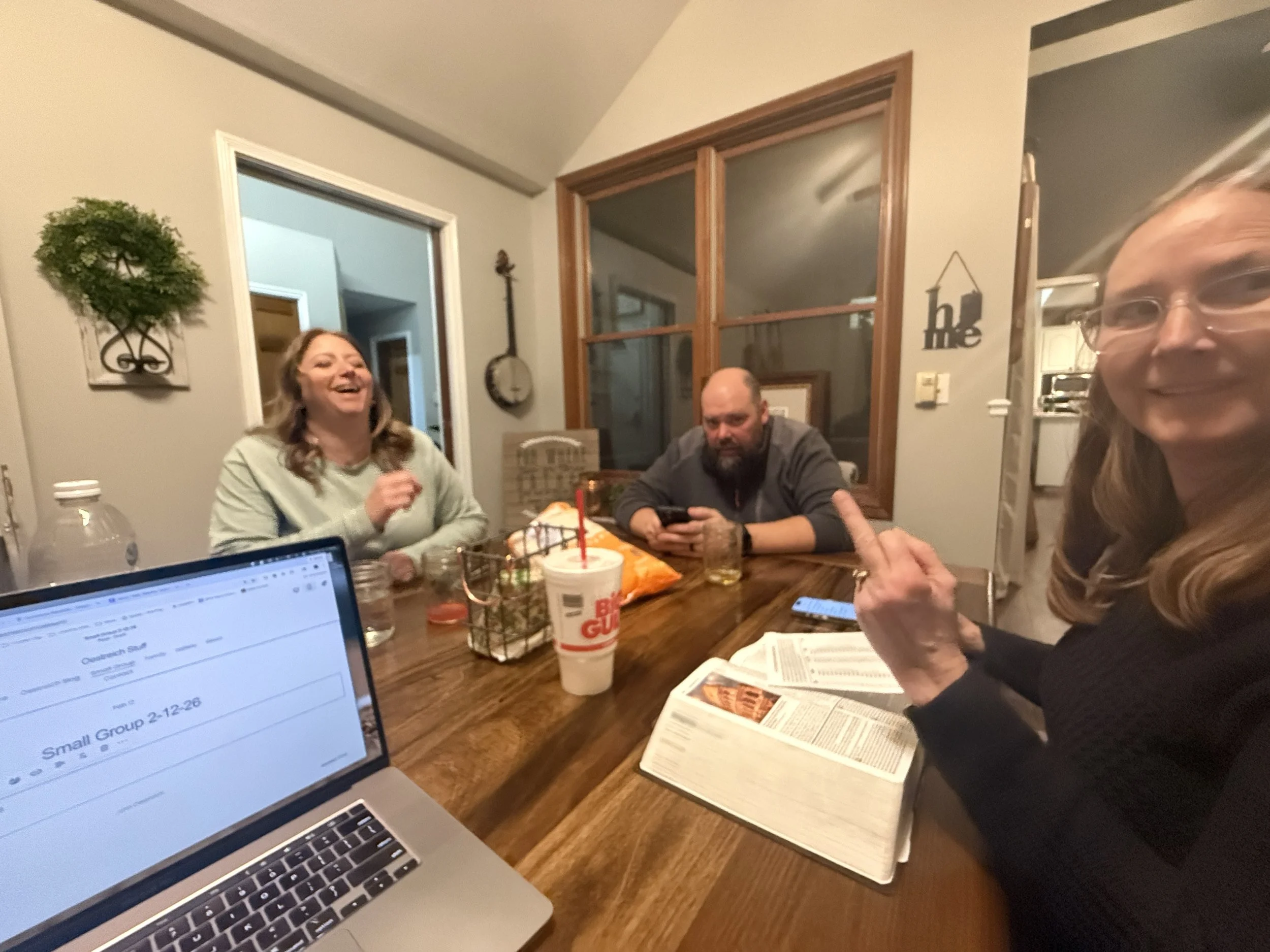
When are we going to meet next? 2/23/26
What are we going to study/talk about? Ruthless Elimination of Hurry or Letters to the Church


Film as Literature - Tri 3 Movie List
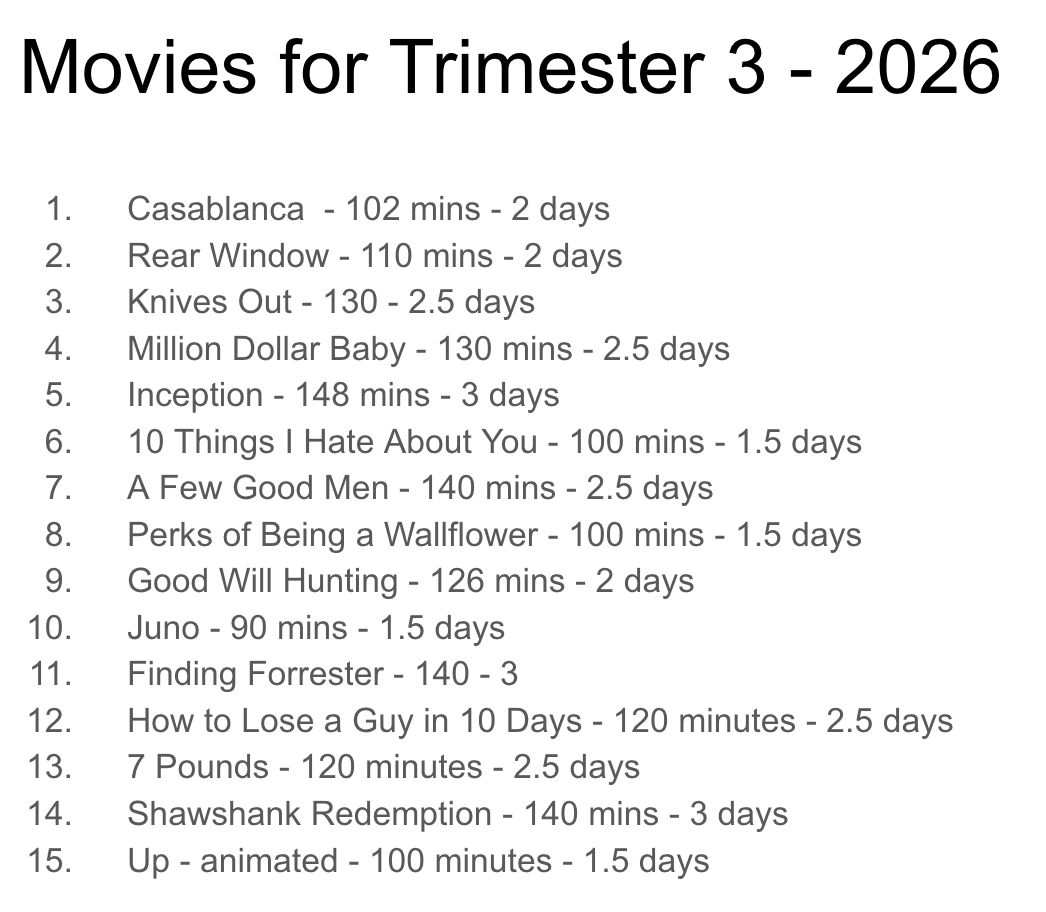
Well, here it is - The List for my third-trimester Film as Literature class. Since I know I will need to validate my choices repeatedly, I will do so here. Per normal, I will leave the box at the bottom open for you to send me your vitriol.
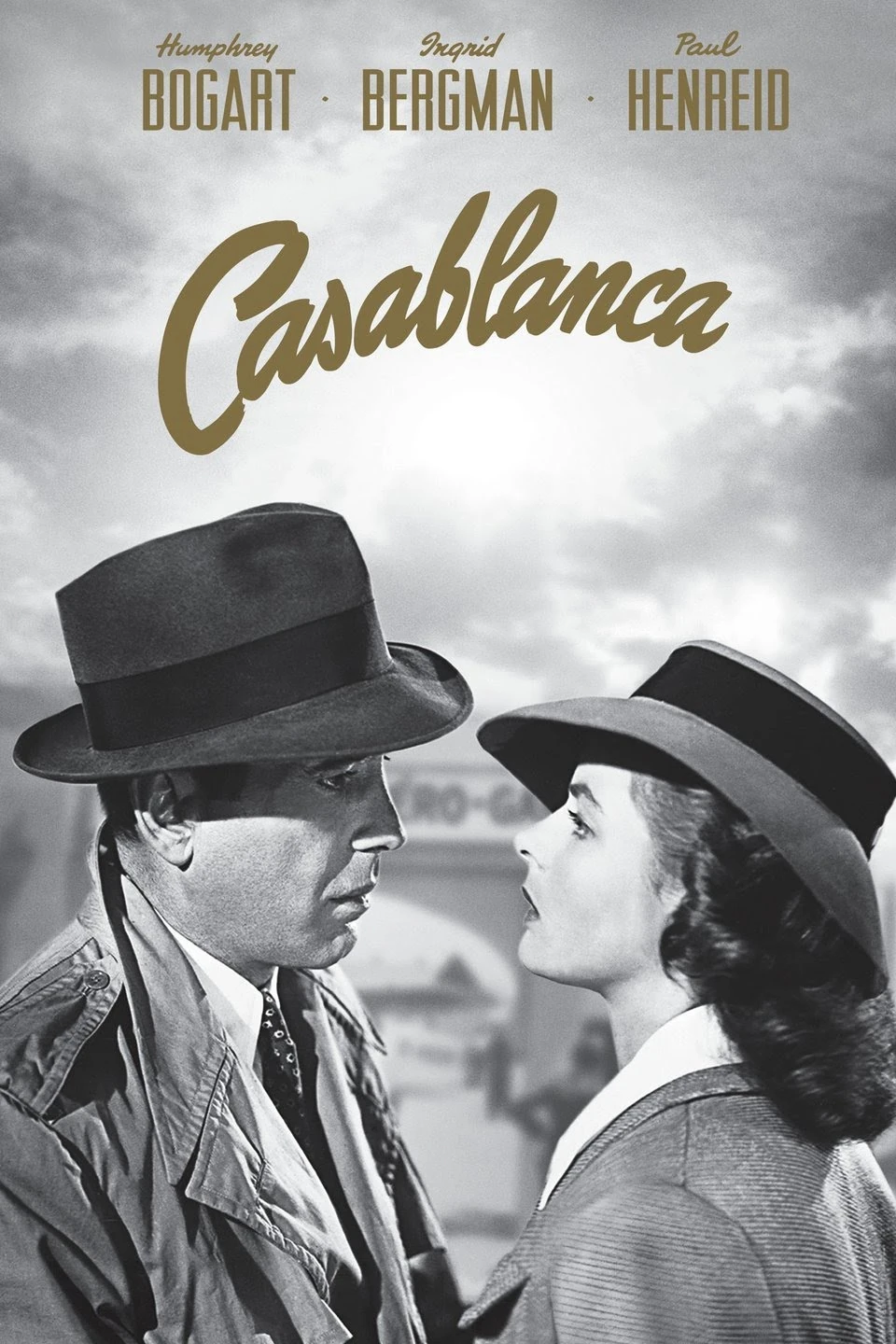
Casablanca 1947
The Humphrey Bogart and Ingrid Bergman classic. In black and white. Historical and propaganda-laden romance film that is almost universally disliked by students - I hear about it often. Alas, it is a classic film with some of the most recognizable quotes of all time. Sorry kiddos.
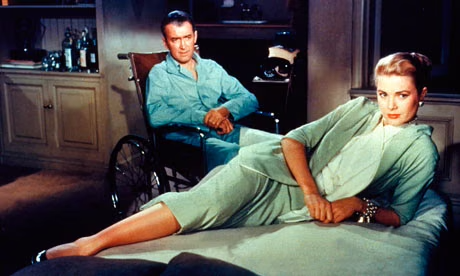
Rear Window 1954
This is a truly underappreciated film featuring Jimmy Stewart and the Princess of Monaco, Grace Kelly. She makes quite an entrance, and the gender discussions underscore a good thriller. Jimmy Stewart is basically in a chair the whole time and experiences some truly terrible special effects at the movie’s climax.

Knives Out 2019
Classic whodunnit with a great ensemble cast. This was the first movie I saw with Anna DeArmas in, and she plays her role very well. Keeps you on the edge of your seat until the end.
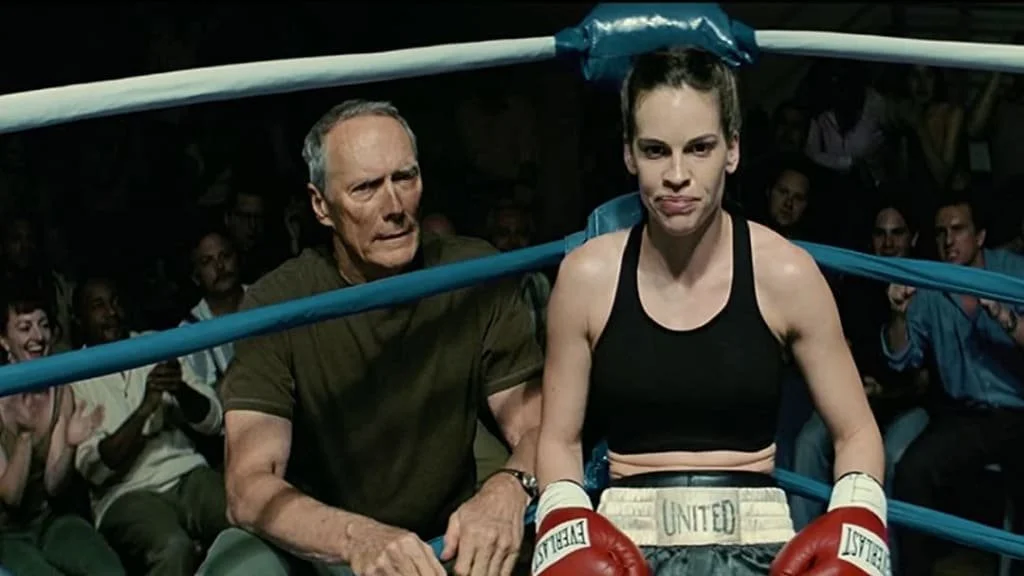
Million Dollar Baby 2004
Tears, they are inevitable. Unless you have no soul.
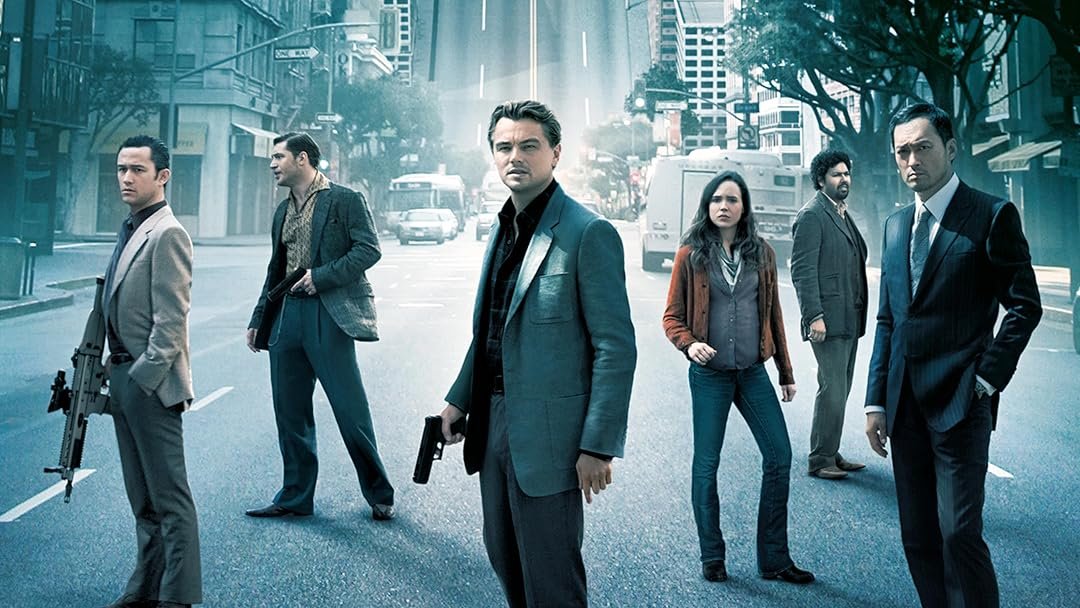
Inception 2010
Easily the hardest movie to follow we watch all trimester. Great special effects and character arc from Leonardo DiCaprio.

10 Things I Hate About You 1999
First trimester, I was told in no uncertain terms by some of the girls in my class that my list of movies was filled with “dude movies.” Upon reflection, I realized they were right. This movie came to mind really quickly. A coming-of-age film that is based on Shakespeare’s Taming of the Shrew, it is filled with teenage angst and invective, enough so that the comment about “dude movies” died out pretty quickly.

A Few Good Men 1992
There are a good many courtroom dramas that are really good. The Rainmaker 1997 or Runaway Jury 2003 and lots more, but this one is one of my favorites. Great actors, good arcs, good film. Rob Reiner, RIP.

Perks of Being a Wallflower 2012
Another coming-of-age, but far more serious than 10 Things. This one deals with serious issues that are part of the becoming an adult - issues that are more and more prevalent in today’s high schools.
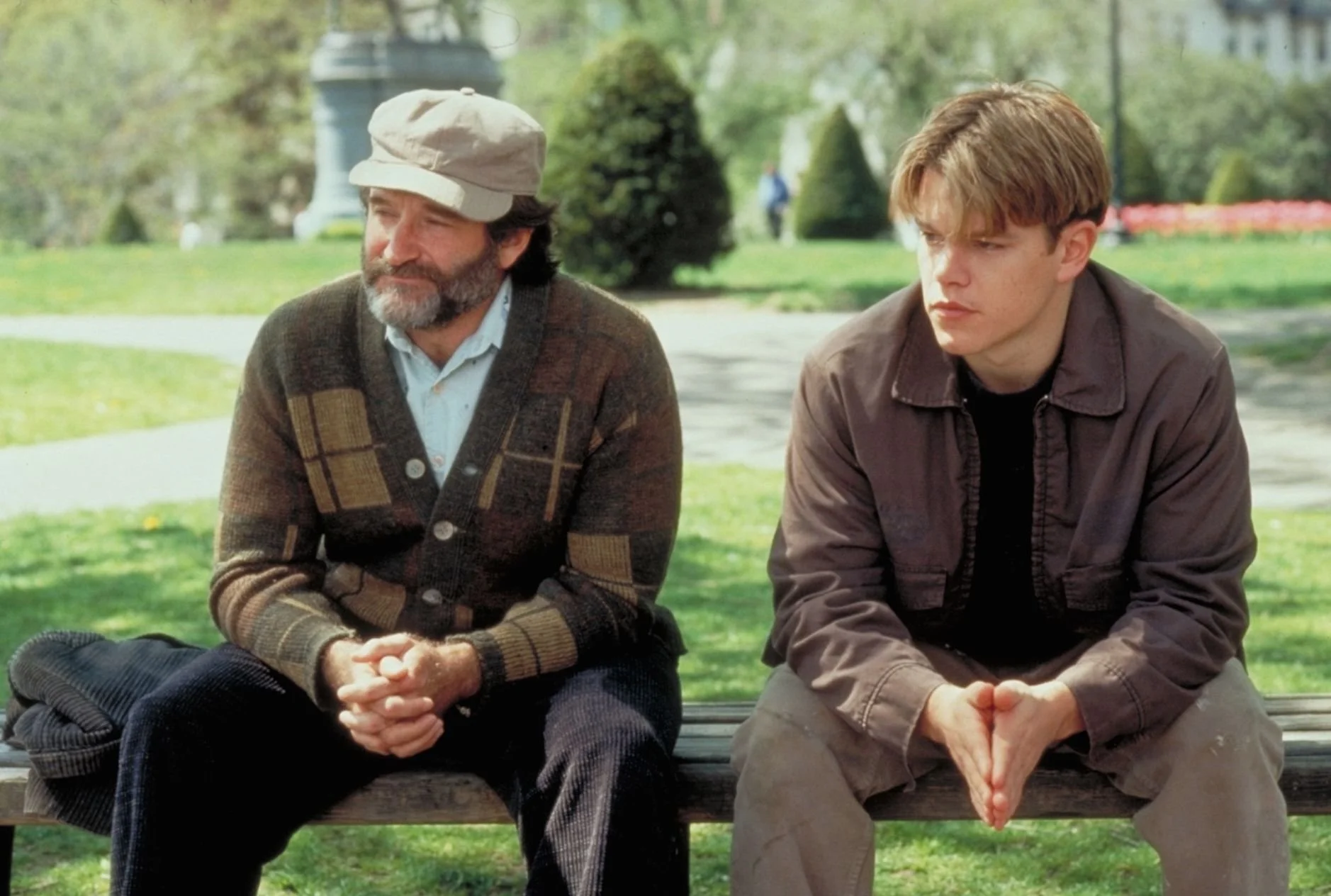
Good Will Hunting 1997
This had to be in the list. There is such a cool amount of lore regarding this film - for instance, they almost lost the rights to it until Miramax (yes, Harvey Weinstein) came in and let them do it, but only after Robin Williams signed on.
It is unquestionable crass and coarse, but you could write books on the character arc of Will Hunting alone. Standout film.

Juno 2007
Underneath all of the fast dialogue and good music, its a pretty thoughtful story and responsibility, identity, and growing up faster than you might have wanted to. Jason Bateman also plays a total ass (not the likable one he plays in so many other movies) really well in this movie.
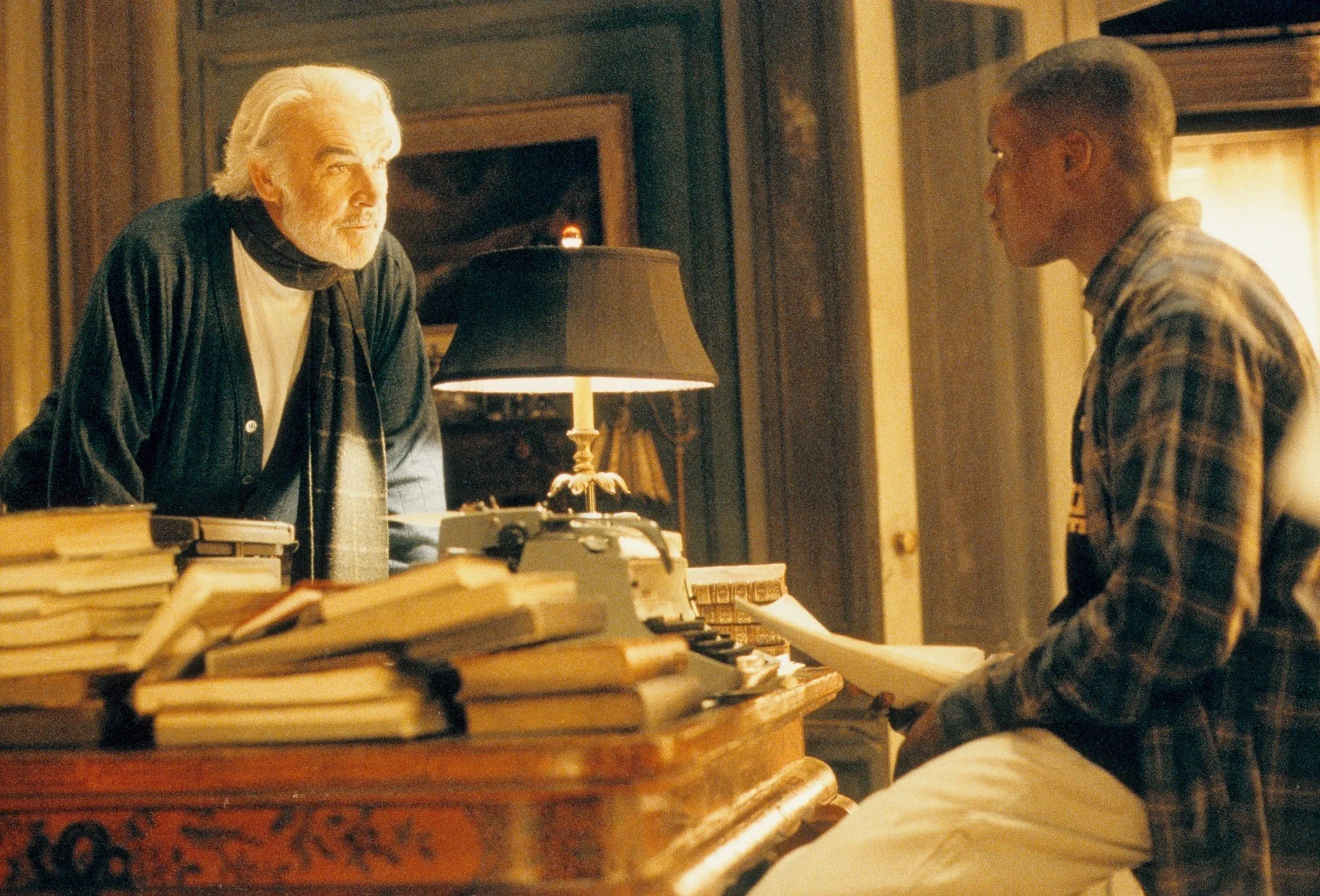
Finding Forrester 2000
This is just such a great film, a movie about writing disguised as a basketball movie. Rob Brown, who plays the protagonist Jamal Wallace, auditioned trying to get a position as an extra to pay off his cell phone bill. Gus Van Sant of Good Will Hunting fame saw something in him and gave him the role. It has a great score as well, very fitting for the imagery.

How to Lose a Guy in 10 Days 2003
More reaction to my “dude movies.” This title came up and I had access to it, so I went with it. Its…okay.

7 Pounds 2008
Before he was assaulting people at awards shows, Will Smith made some pretty good movies. This is one of them. The end is really amazing and I did not see it coming at all. This one brings tears.
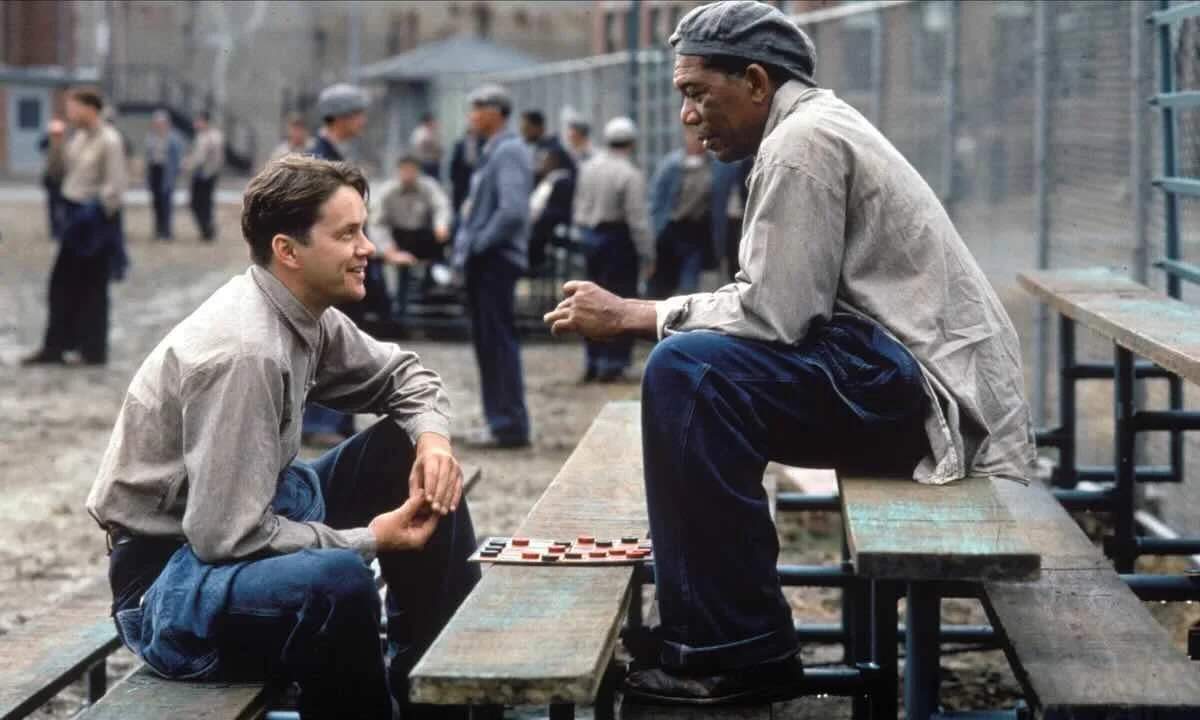
Shawshank Redemption 1994
If you do not know of or like this movie, I just do not know what to say to you, you uncultured swine. “Get busy living, or get busy dying”

Up 2009
Perhaps this movie resonates with me as I continue my march towards looking like Carl Fredericksen, the old man on the right. Or it is because I was lambasted for not having a single animated movie on the list.
I have not been teaching Film as Literature very long, so initially I was not going to change the lineup too much. Well, enough of that. There are several movies on this list that I have never used before so I will be interested to see what kind of reaction they get. Good reviews or bad reviews, I am sure I won’t have to wait long to hear what my students think.
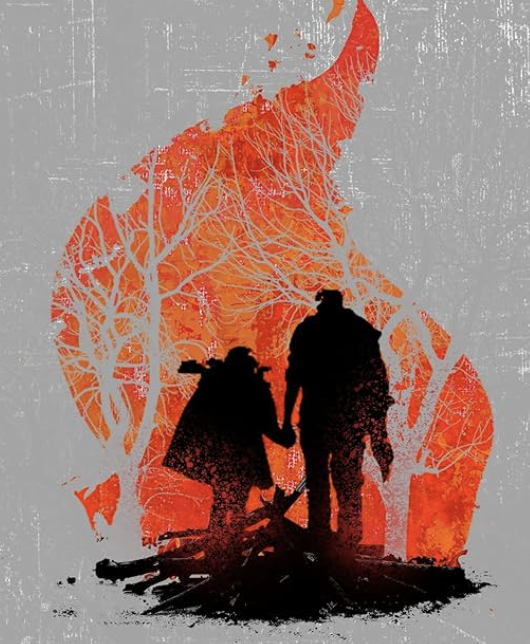
The Road by Cormac McCarthy
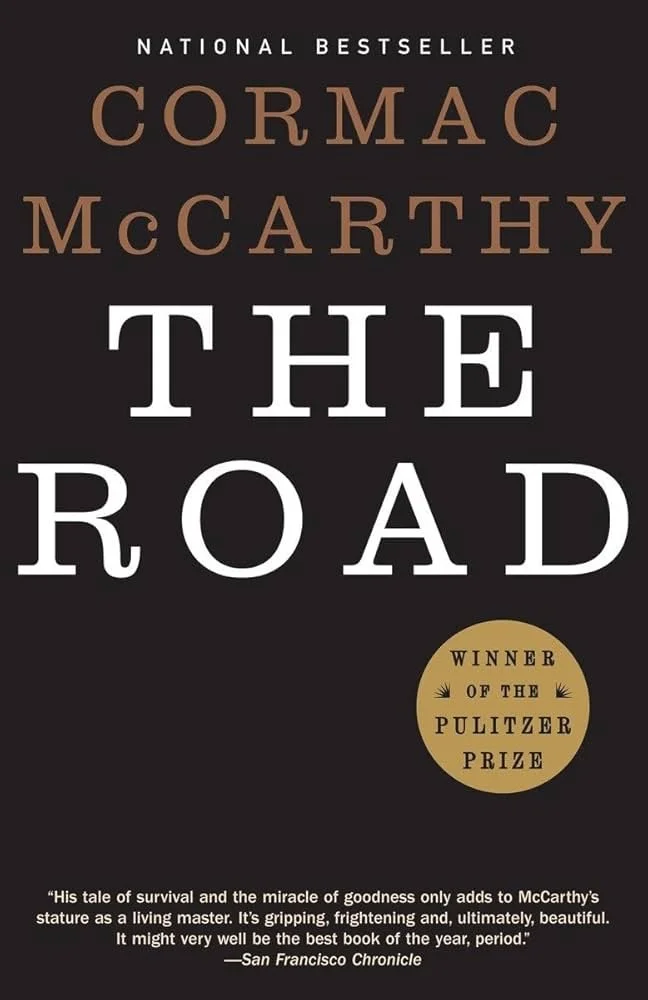
I am always on the lookout for another book to read. Saw The Road by Cormac McCarthy in the library at school, which, by the way, does a really good job of putting books out for students (and teachers) to see. I noticed that it was a Pulitzer Prize winner, so I thought it would be a good read. I asked Sarah Gibbs, WHS's everything person, about it and became more intrigued. Libby app here I come.
Goodness gracious, this is a depressing read. It is ponderous and macabre and morbid, yet all the while hauntingly fascinating. The Road is a stark novel that takes storytelling down to the bare essentials. Set in a post-apocalyptic world where civilization has totally collapsed, the book follows a father and son as they journey south through an utterly destroyed America, where the only hope is to try to survive another day. There is no explanation as to why the world ended, but there are clues along the way. I believe that this was an intentional choice. The story is less about what happened and more about what remains when all things familiar have disappeared. This yarn is about enduring hardship, love, and attempting to maintain one’s moral compass. In this world there are no rewards for goodness of character.
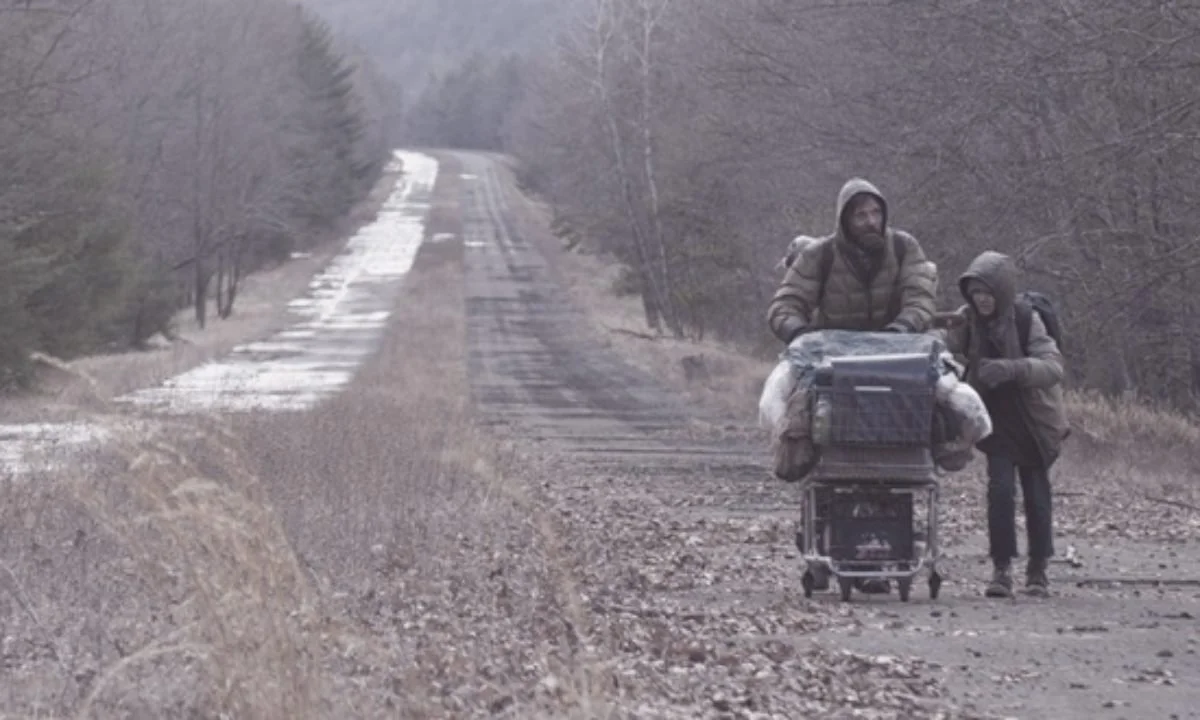
This picture pretty much depicts the gray nature of McCarthy’s writing - drab and dismal.
For me, the writing style was painful. McCarthy’s prose is Spartan and fragmented, which adds to the overall unsettling nature of the book. There are no chapter breaks; it feels like one long stream of consciousness. But what was the most difficult to parse was the lack of quotation marks in the dialogue. It was challenging at first, forcing me to slow way down and sit with each moment, making those moments even more poignant. This method also seemed to become more and more effective as the novel progresses. McCarthy manipulates emotion with the amount of dialogue that he uses as well. The silence between dialogue sets echoes the emptiness of the landscape and emphasizes how little comfort language itself can provide in such a bleak setting.
At the heart of the story is the relationship between the father and the son, which provides the book’s emotional core. Fiercely protective, the father will stop at nothing to keep his son safe. The boy is all about compassion, innocence, and morality. The phrase, “carrying the fire,” came to represent the preservation of humanity and ethics - the values that were prized before the apocalypse. This resonates with me. As a father, one of my primary responsibilities is to protect my family, and this book had me pondering how far I would be willing to go to ensure their safety. Would I be willing to forego my humanity to protect my sons? If survival necessitated cruelty, I think I would be on the side of the father. I assuage the guilt this causes me by telling myself I am just being as pragmatic as the father in the story. His pragmatism and the boy’s empathy created difficult questions about what being “good” meant in their broken world.
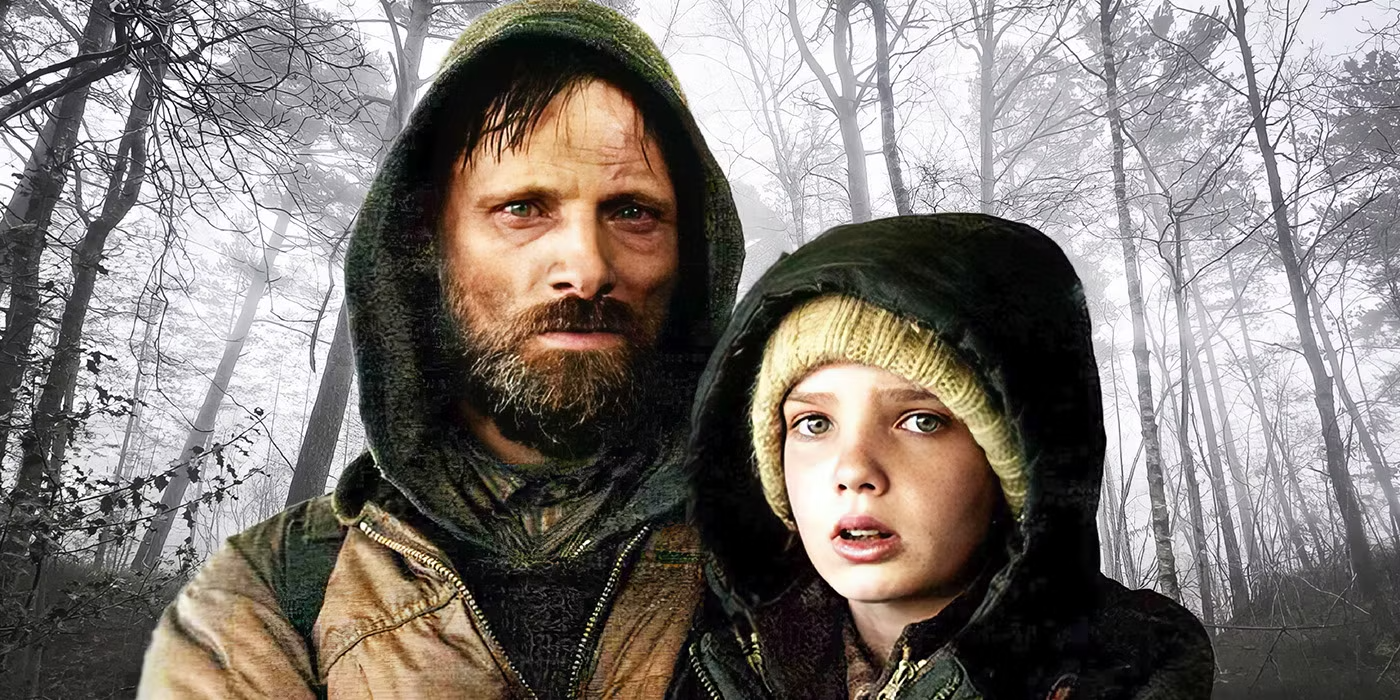
The dichotomy that hinges on “carrying the fire,” while clearly the main point of the story, was not enough to keep me from wondering over and over about what destroyed the planet. There were pretty significant hints along the way. McCarthy wrote about the ever-present ash that covered everything, and it got me thinking about what would cause that. I considered nuclear war, whose holocaust would cause a nuclear winter that would fit with many of the planet’s symptoms, but radiation was an issue that was never spoken of. Meteor striking Earth? Maybe a super volcano exploding? Both of these would leave ash covering the land for thousands of miles. This ash would destroy plant life as well as block the sun, which would account for the cold temperatures that father and son were constantly battling and the lack of plant life. I went online and discovered that I was not the only one who was asking these questions, but unfortunately, no one had any answers that were better than mine.
McCarthy doesn’t fear exploring the baser side of humanity by examining what people will do when they are afraid, isolated, and with the world in total moral collapse. When push comes to shove, people are capable of truly horrifying acts. If you and your family are about to die of hunger, cannibalism becomes acceptable. One of the worst scenes is when father and son find a basement filled with people who are kept in chains, missing various body parts that have been cut off, cooked, and eaten. With all that being said, the story is never allowed to be totally hopeless. Along the way, small acts of kindness, trust, and the loving bond between father and son demonstrate that goodness can exist even while society has devolved. This up and down between goodness and hope is what kept me engaged, willing to process the depths of depravity and keep reading.
On the Road is no walk in the park, but it does leave a mark. It forced me to question what I would do were I in that situation - where would I stand regarding my morals and ethics if the concept of just getting through the day was where my focus lay? It left me thinking that no matter what happens in life, some things are worth “carrying the fire.” Love of family and the ideals of right versus wrong are to be protected no matter the cost.
It was with mixed emotions that I finished the book - McCarthy adroitly weaves a tale that is a marathon of distress and anguish that I was happy to finish in some ways, yet a beacon of perseverance and hope in others. It is still something I think about.
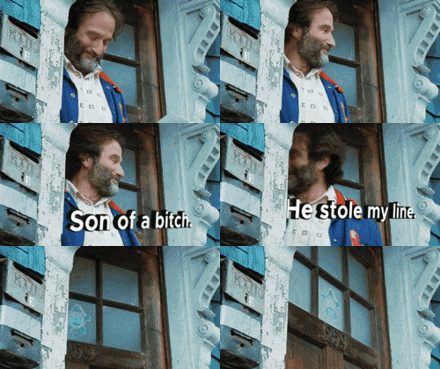
This is a deep dive

Recently my Film as Literature class watched Good Will Hunting. If you haven’t seen it, man you are missing a good one. It has some of the best writing and character arcs that I can think of. That plus an amazing performance by the late Robin Williams (Academy Award for Best Supporting Actor 1998) and the explosive arrival of Matt Damon and to a lesser extent Ben Affleck, it tells an amazing story of recovery and self-discovery.
What this post is about, however, is a response to a scene where Will, played by Matt Damon, argues and eventually breaks up with this girlfriend Skylar, played by Minnie Driver. In it he becomes very angry and displays some violent tendencies by punching a wall and basically losing his crap. Students vehemently dismissed Will as just another bad guy and that Skylar was better off. Tough to argue with really. I told them that if a significant other treats then that way, they should bail. Done and done.

This case is very nuanced. I always say that the ‘what’ of a situation is very easy to see, but the ‘why’ is always more nuanced and complex - it takes some work to get to the bottom of. Note: I am not letting Will off the hook; he/we are responsible for our/his actions and the inevitable consequences which follow. I just wanted to take a longer look at his why.
This look started with a book by John Yorke entitled Into the Woods. It talked about the manner in which writers create characters with foibles and the way in which they make them feel real and relatable (eventually) to audiences. It starts with your hero/protagonist have a real issue that they are totally unaware of, usually brought on by trauma (AKA - The Wound) and that initially they are totally blind to it. The story that takes us on a journey where a veritable army of people help them see the problem and deal with it. I did not purchase or read the book, I was able to find enough excerpts from it that I was able to, along with other websites, put together some thoughts on how what he wrote applies to the character of Will Hunting.
I read and watched and wrote. And wrote. And wrote. Before long I had a 3 page document. that I know my students would attempt (and probably succeed) to lynch me if delivered a lecture/discussion covering all of it. But I wanted them to have the information - so I made a video that went nicely along with the document. The document is below along with the video if you want to go down this rabbit hole with me.
If you don’t really want to read this treatise on my ideas of psychology and Will Hunting, you can also watch the video that I made that represents some of the concepts that Yorke talks about and assimilated into a much easier to digest package - maybe.
Oestreich
FAL
Good Will Hunting
Will’s defense mechanisms and emotional catharsis
Into the Woods - by John Yorke
"...story matches psychological theory: characters are taking on a journey to acknowledge and assimilate the traumas in their past.
By confronting and coming to terms with the cause of their traumas they can finally move on."
How do characters use defense mechanisms to protect themselves?
How are supporting characters designed to help weaken those defenses?
How do these elements work together to create a powerful catharsis for characters and audience?
The Defense Mechanism
stories with a positive change arc, the protagonist starts with a weakness
a lie they believe about themselves or the world that they will have to overcome
weakness is usually rooted in some past trauma
often referred to as 'The Wound'
In GWH, Will's wound is his awful childhood - terrible abuse at the hands of his foster father
Wills wound/weakness - the belief that stepping out of his comfort zone will lead to emotional pain.
weaknesses become behavior through defense mechanisms
Yorke "...ego defense mechanisms are the masks characters wear to hide their inner selves; they are the part of the character we meet when we first join a story, that part that will -- if the archetype is correct -- slough away."
We see in Will's first therapy session his fear of exposing his wound results in his defense mechanism - mocking the whole reason they are there
When the session begins, he doesn't look at Sean, and seems more interested in the room
When Sean tries to connect with him, he changes the subject, talking about the books.
Here he is flexing his intellect trying to intimidate and making Sean feel small.
None of this affects Sean, who can keep up with Will and parry his smart ass quips.
Bit about lifting
So will looks for a new tactic, one that might hurt Sean directly
Analyzes his painting which finds Sean going after Will and Will being helpless
This scene paints a clear picture of how will uses his defense mechanisms to avoid dealing with uncomfortable situations
Yorke "The key to writing a good defense mechanism is that the characters themselves are completely unaware that they are exhibiting defensive behaviors...the other characters in the film and the viewers in the audience watch the heroes and become frustrated with their obliviousness to their own glaring problems."
Will's biggest issue is that he is not aware of these defense mechanisms and it will take small army or characters to: Wear down the Protagonist's Defenses.
Lambeau notices his genius and tries to set him up with great jobs.
Skylar is unlike any girl he has ever met
But to pursue these opportunities Will would have to leave his comfort zone and take risks -- which is what he is most terrified of doing.
- so he unconsciously uses defense mechanisms to justify his inaction
Consider the way he turns down the job as well as how he breaks things off with Skylar
- they are both worst case scenarios
Rationalization - explaining his decision(s) in a seemingly logical manner to avoid the emotion behind it.
Sean, "You're always afraid to take the first step because all you see is every negative thing 10 miles down the road."
- when Sean asks Will to tell him what he wants to do, he is showing Will the truth that he is hiding from.
Skylar - asks him to go to California
- Will once again jumps to the worst case scenario; that they could be in California next week and Skylar could be done with Will and he would have nowhere to go.
- Skylar doesn't allow him to rationalize his refusal and calls him out on the real issue: "You're afraid that I won't love you back. You know what? I'm afraid too. But @#$% it, I want to give it a shot and at least I am honest with you."
- Skylar forces Will to see the truth he is hiding from - but Will isn't ready to change yet, so he uses an even harsher mix of defense mechanisms are triggered.
- When Will looks her dead in the eye and tells her he doesn't love her - it is a small-scale form of regression returning him to an earlier safe state -- before he was in an emotionally challenging relationship with Skylar.
- when Will wasn't with Skylar he didn't have to be emotionally vulnerable and that is far easier than dealing with risks and how he is actually feeling.
Regression is one of the biggest ways that Will avoids leaving his comfort zone - his friends
- They are immature, yet fiercely loyal and provide Will a place where he is never going to be challenged or have to grow up.
- Will convinces himself that it is okay to sacrifice job opportunities and relationships because he will always have a home with his friends.
But Will is in denial about what he really wants
In steps Chuckie - his closest friend in the world, and calls him out on his BS
- Chuckie forces Will to see the truth he is hiding from
Turning point in the film - Will realizes the only person keeping him from moving forward is himself
Will lowers defenses, but not yet - No meaningful change has occurred bc that requires catharsis.
Catharsis
The dents that have been made in Will's emotional armor throughout the film -in the films climactic scene, Will finally releases his repressed emotions.
- Will realizes that Sean has his file detailing all of his physical abuse
- they commiserate about their painful childhoods
- Sean looks for a way to get through to Will.

"It's not your fault"
As Sean repeats this phrase, Will goes through his arsenal of defenses:
- makes light of it
- then he claims that he has gotten the message, hoping Sean will stop
- finally Will turns to aggression
Through their time together, Sean has learned all of Will's defense mechanisms and refuses to let him escape the situation until all of Will's walls are torn down.
- Sean takes Will in his arms and holds him like a child
- 2 lonely souls being father and son together
The events of the plot have brought Will to a place where he experiences a psychological catharsis - and when we went on the journey with him, the audience experiences a dramatic catharsis.
Good stories draw us into their world and make us empathize with the struggles of the characters.
We witness their inner conflict as they avoid the very thing that will make them whole, oftentimes recognizing that same behavior in ourselves.
We root for the cast of characters around them and hope that they can help show our hero the truth that they are hiding from.
If the story is written and executed just right, we also experience a much needed catharsis.

Mark
Mark 1
Preaching of John the Baptist
16As He was going along by the Sea of Galilee, He saw Simon and Andrew, the brother of Simon, casting a net in the sea; for they were fishermen. 17And Jesus said to them, “Follow Me, and I will make you become fishers of men.” 18Immediately they left their nets and followed Him. 19Going on a little farther, He saw James the son of Zebedee, and John his brother, who were also in the boat mending the nets. 20Immediately He called them; and they left their father Zebedee in the boat with the hired servants, and went away to follow Him.
- This is pretty ballsy isn’t it? It begs questions such as, did they already know who he was? What was it about Jesus that made you want to drop your lives and follow? I am not questioning whether or not it was a good decision (if the Son of Man asks you to do something - better do it) but what made it so easy for them?
35In the early morning, while it was still dark, Jesus got up, left the house, and went away to a secluded place, and was praying there.
- I need to come up with a place for this. Or do I?
Mark 2
The Paralytic Healed
4Being unable to get to Him because of the crowd, they removed the roof above Him; and when they had dug an opening, they let down the pallet on which the paralytic was lying.
- the faith this demonstrated; I mean, tearing down a roof…
17And hearing this, Jesus *said to them, “It is not those who are healthy who need a physician, but those who are sick; I did not come to call the righteous, but sinners.”
- Mission
18John’s disciples and the Pharisees were fasting; and they *came and *said to Him, “Why do John’s disciples and the disciples of the Pharisees fast, but Your disciples do not fast?” 19And Jesus said to them, “While the bridegroom is with them, the attendants of the bridegroom cannot fast, can they? So long as they have the bridegroom with them, they cannot fast. 20But the days will come when the bridegroom is taken away from them, and then they will fast in that day. 21“No one sews a patch of unshrunk cloth on an old garment; otherwise the patch pulls away from it, the new from the old, and a worse tear results. 22No one puts new wine into old wineskins; otherwise the wine will burst the skins, and the wine is lost and the skins as well; but one puts new wine into fresh wineskins.”
Context of the Question (Mark 2:18)
Who: Disciples of John the Baptist and the Pharisees.
What: They were fasting, a common Jewish practice for mourning or seeking God, and questioned why Jesus' followers didn't.
Why: It was an accusation that Jesus' disciples didn't follow religious norms, reflecting broader criticism of Jesus' ministry
.
Jesus' Response & Meaning
Bridegroom Analogy (Mark 2:19-20): Jesus compares Himself to the bridegroom and His followers to wedding guests. Guests celebrate, they don't fast, while the groom is present. Fasting is for when the groom is "taken away" (His crucifixion/absence).
New Patch/Old Garment (Mark 2:21-22): You don't sew new, unshrunk cloth (Jesus' new teaching) onto an old garment (old traditions) because it will tear.
New Wine/Old Wineskins (Mark 2:22): Similarly, new wine (the Gospel/His presence) needs new wineskins (new ways of life/understanding) to hold it; old skins burst, ruining both.
Core Message: Jesus' arrival signifies a new era, requiring a spiritual transformation, not just adding new practices to old structures. The "new wine" of His kingdom can't be contained by the "old wineskins" of rigid, traditionalistic Judaism.
Significance
Jesus wasn't against fasting but against unnecessary fasting when He, the source of joy, was present.
He challenged the legalistic interpretation of the Law, emphasizing that the Sabbath (and all law) was made for people, not the other way around (Mark 2:27-28).
It highlights the revolutionary nature of Jesus' ministry, pointing towards a deeper, transformed relationship with God, rather than mere outward observance.
Mark 3
Jesus Heals on the Sabbath
23And He called them to Himself and began speaking to them in parables, “How can Satan cast out Satan? 24If a kingdom is divided against itself, that kingdom cannot stand. 25If a house is divided against itself, that house will not be able to stand. 26If Satan has risen up against himself and is divided, he cannot stand, but he is finished!
- A house divided against itself can not stand. I believe this government can not endure permanently, half slave, and half free. — Abraham Lincoln
28“Truly I say to you, all sins shall be forgiven the sons of men, and whatever blasphemies they utter; 29but whoever blasphemes against the Holy Spirit never has forgiveness, but is guilty of an eternal sin”— 30because they were saying, “He has an unclean spirit.”
- Unforgivable sin. I wouldn’t mind having this explain to me in small words.
31Then His mother and His brothers *arrived, and standing outside they sent word to Him and called Him. 32A crowd was sitting around Him, and they *said to Him, “Behold, Your mother and Your brothers are outside looking for You.” 33Answering them, He *said, “Who are My mother and My brothers?” 34Looking about at those who were sitting around Him, He *said, “Behold My mother and My brothers! 35For whoever does the will of God, he is My brother and sister and mother.”
- our brothers and sisters in Christ are even more important than our blood relatives.
Mark 4
Parable of the Sower and Soils
10As soon as He was alone, His followers, along with the twelve, began asking Him about the parables. 11And He was saying to them, “To you has been given the mystery of the kingdom of God, but those who are outside get everything in parables, 12so that while seeing, they may see and not perceive, and while hearing, they may hear and not understand, otherwise they might return and be forgiven.”
- I think I understand this…but wouldn’t mind someone to clarify.
Mark 5
The Gerasene Demoniac
9And He was asking him, “What is your name?” And he *said to Him, “My name is Legion; for we are many.” 10And he began to implore Him earnestly not to send them out of the country. 11Now there was a large herd of swine feeding nearby on the mountain. 12The demons implored Him, saying, “Send us into the swine so that we may enter them.” 13Jesus gave them permission. And coming out, the unclean spirits entered the swine; and the herd rushed down the steep bank into the sea, about two thousand of them; and they were drowned in the sea.
—> Several questions here:
1. Legion. Is this because this one dude had all of those demons inside him and was therefore supernaturally strong and no one could chain him up? Not sure why but this is absolutely terrifying
2. Why swine? Particularly if you are going to get tossed off a cliff right after it? 2000? Some farmer must have been upset.
41Taking the child by the hand, He *said to her, “Talitha kum!” (which translated means, “Little girl, I say to you, get up!”). 42Immediately the girl got up and began to walk, for she was twelve years old. And immediately they were completely astounded. 43And He gave them strict orders that no one should know about this, and He said that something should be given her to eat.
—> Two interesting things. He told them to feed her, which for whatever reason I find amusing. Secondly, and much more importantly, why does Jesus always tell people not to tell anyone of what He has done? Wouldn’t it be better if they knew it was Him and therefore speak of His power and glory? The other thing is that expecting people who just watched someone raised from the dead to not speak of it is probably not very likely.
—> I have to admit that I would not have thought about touching Jesus’ robe and think it would heal me. Not sure if this means anything at all or nothing.
Mark 6
Teaching at Nazareth
4Jesus said to them, “A prophet is not without honor except in his hometown and among his own relatives and in his own household.”
—> Is there special meaning behind this statement? Is it simply that familiarity breeds contempt? Something more bc they all believed He was blaspheming?