
This is a deep dive

Recently my Film as Literature class watched Good Will Hunting. If you haven’t seen it, man you are missing a good one. It has some of the best writing and character arcs that I can think of. That plus an amazing performance by the late Robin Williams (Academy Award for Best Supporting Actor 1998) and the explosive arrival of Matt Damon and to a lesser extent Ben Affleck, it tells an amazing story of recovery and self-discovery.
What this post is about, however, is a response to a scene where Will, played by Matt Damon, argues and eventually breaks up with this girlfriend Skylar, played by Minnie Driver. In it he becomes very angry and displays some violent tendencies by punching a wall and basically losing his crap. Students vehemently dismissed Will as just another bad guy and that Skylar was better off. Tough to argue with really. I told them that if a significant other treats then that way, they should bail. Done and done.

This case is very nuanced. I always say that the ‘what’ of a situation is very easy to see, but the ‘why’ is always more nuanced and complex - it takes some work to get to the bottom of. Note: I am not letting Will off the hook; he/we are responsible for our/his actions and the inevitable consequences which follow. I just wanted to take a longer look at his why.
This look started with a book by John Yorke entitled Into the Woods. It talked about the manner in which writers create characters with foibles and the way in which they make them feel real and relatable (eventually) to audiences. It starts with your hero/protagonist have a real issue that they are totally unaware of, usually brought on by trauma (AKA - The Wound) and that initially they are totally blind to it. The story that takes us on a journey where a veritable army of people help them see the problem and deal with it. I did not purchase or read the book, I was able to find enough excerpts from it that I was able to, along with other websites, put together some thoughts on how what he wrote applies to the character of Will Hunting.

I read and watched and wrote. And wrote. And wrote. Before long I had a 3 page document. that I know my students would attempt (and probably succeed) to lynch me if delivered a lecture/discussion covering all of it. But I wanted them to have the information - so I made a video that went nicely along with the document. The document is below along with the video if you want to go down this rabbit hole with me.
If you don’t really want to read this treatise on my ideas of psychology and Will Hunting, you can also watch the video that I made that represents some of the concepts that Yorke talks about and assimilated into a much easier to digest package - maybe.
Oestreich
FAL
Good Will Hunting
Will’s defense mechanisms and emotional catharsis
Into the Woods - by John Yorke
"...story matches psychological theory: characters are taking on a journey to acknowledge and assimilate the traumas in their past.
By confronting and coming to terms with the cause of their traumas they can finally move on."
How do characters use defense mechanisms to protect themselves?
How are supporting characters designed to help weaken those defenses?
How do these elements work together to create a powerful catharsis for characters and audience?
The Defense Mechanism
stories with a positive change arc, the protagonist starts with a weakness
a lie they believe about themselves or the world that they will have to overcome
weakness is usually rooted in some past trauma
often referred to as 'The Wound'
In GWH, Will's wound is his awful childhood - terrible abuse at the hands of his foster father
Wills wound/weakness - the belief that stepping out of his comfort zone will lead to emotional pain.
weaknesses become behavior through defense mechanisms
Yorke "...ego defense mechanisms are the masks characters wear to hide their inner selves; they are the part of the character we meet when we first join a story, that part that will -- if the archetype is correct -- slough away."
We see in Will's first therapy session his fear of exposing his wound results in his defense mechanism - mocking the whole reason they are there
When the session begins, he doesn't look at Sean, and seems more interested in the room
When Sean tries to connect with him, he changes the subject, talking about the books.
Here he is flexing his intellect trying to intimidate and making Sean feel small.
None of this affects Sean, who can keep up with Will and parry his smart ass quips.
Bit about lifting
So will looks for a new tactic, one that might hurt Sean directly
Analyzes his painting which finds Sean going after Will and Will being helpless
This scene paints a clear picture of how will uses his defense mechanisms to avoid dealing with uncomfortable situations
Yorke "The key to writing a good defense mechanism is that the characters themselves are completely unaware that they are exhibiting defensive behaviors...the other characters in the film and the viewers in the audience watch the heroes and become frustrated with their obliviousness to their own glaring problems."
Will's biggest issue is that he is not aware of these defense mechanisms and it will take small army or characters to: Wear down the Protagonist's Defenses.
Lambeau notices his genius and tries to set him up with great jobs.
Skylar is unlike any girl he has ever met
But to pursue these opportunities Will would have to leave his comfort zone and take risks -- which is what he is most terrified of doing.
- so he unconsciously uses defense mechanisms to justify his inaction
Consider the way he turns down the job as well as how he breaks things off with Skylar
- they are both worst case scenarios
Rationalization - explaining his decision(s) in a seemingly logical manner to avoid the emotion behind it.
Sean, "You're always afraid to take the first step because all you see is every negative thing 10 miles down the road."
- when Sean asks Will to tell him what he wants to do, he is showing Will the truth that he is hiding from.
Skylar - asks him to go to California
- Will once again jumps to the worst case scenario; that they could be in California next week and Skylar could be done with Will and he would have nowhere to go.
- Skylar doesn't allow him to rationalize his refusal and calls him out on the real issue: "You're afraid that I won't love you back. You know what? I'm afraid too. But @#$% it, I want to give it a shot and at least I am honest with you."
- Skylar forces Will to see the truth he is hiding from - but Will isn't ready to change yet, so he uses an even harsher mix of defense mechanisms are triggered.
- When Will looks her dead in the eye and tells her he doesn't love her - it is a small-scale form of regression returning him to an earlier safe state -- before he was in an emotionally challenging relationship with Skylar.
- when Will wasn't with Skylar he didn't have to be emotionally vulnerable and that is far easier than dealing with risks and how he is actually feeling.
Regression is one of the biggest ways that Will avoids leaving his comfort zone - his friends
- They are immature, yet fiercely loyal and provide Will a place where he is never going to be challenged or have to grow up.
- Will convinces himself that it is okay to sacrifice job opportunities and relationships because he will always have a home with his friends.
But Will is in denial about what he really wants
In steps Chuckie - his closest friend in the world, and calls him out on his BS
- Chuckie forces Will to see the truth he is hiding from
Turning point in the film - Will realizes the only person keeping him from moving forward is himself
Will lowers defenses, but not yet - No meaningful change has occurred bc that requires catharsis.

Catharsis
The dents that have been made in Will's emotional armor throughout the film -in the films climactic scene, Will finally releases his repressed emotions.
- Will realizes that Sean has his file detailing all of his physical abuse
- they commiserate about their painful childhoods
- Sean looks for a way to get through to Will.
"It's not your fault"
As Sean repeats this phrase, Will goes through his arsenal of defenses:
- makes light of it
- then he claims that he has gotten the message, hoping Sean will stop
- finally Will turns to aggression
Through their time together, Sean has learned all of Will's defense mechanisms and refuses to let him escape the situation until all of Will's walls are torn down.
- Sean takes Will in his arms and holds him like a child
- 2 lonely souls being father and son together
The events of the plot have brought Will to a place where he experiences a psychological catharsis - and when we went on the journey with him, the audience experiences a dramatic catharsis.
Good stories draw us into their world and make us empathize with the struggles of the characters.
We witness their inner conflict as they avoid the very thing that will make them whole, oftentimes recognizing that same behavior in ourselves.
We root for the cast of characters around them and hope that they can help show our hero the truth that they are hiding from.
If the story is written and executed just right, we also experience a much needed catharsis.

Mark
Mark 1
Preaching of John the Baptist
16As He was going along by the Sea of Galilee, He saw Simon and Andrew, the brother of Simon, casting a net in the sea; for they were fishermen. 17And Jesus said to them, “Follow Me, and I will make you become fishers of men.” 18Immediately they left their nets and followed Him. 19Going on a little farther, He saw James the son of Zebedee, and John his brother, who were also in the boat mending the nets. 20Immediately He called them; and they left their father Zebedee in the boat with the hired servants, and went away to follow Him.
- This is pretty ballsy isn’t it? It begs questions such as, did they already know who he was? What was it about Jesus that made you want to drop your lives and follow? I am not questioning whether or not it was a good decision (if the Son of Man asks you to do something - better do it) but what made it so easy for them?
35In the early morning, while it was still dark, Jesus got up, left the house, and went away to a secluded place, and was praying there.
- I need to come up with a place for this. Or do I?
Mark 2
The Paralytic Healed
4Being unable to get to Him because of the crowd, they removed the roof above Him; and when they had dug an opening, they let down the pallet on which the paralytic was lying.
- the faith this demonstrated; I mean, tearing down a roof…
17And hearing this, Jesus *said to them, “It is not those who are healthy who need a physician, but those who are sick; I did not come to call the righteous, but sinners.”
- Mission
18John’s disciples and the Pharisees were fasting; and they *came and *said to Him, “Why do John’s disciples and the disciples of the Pharisees fast, but Your disciples do not fast?” 19And Jesus said to them, “While the bridegroom is with them, the attendants of the bridegroom cannot fast, can they? So long as they have the bridegroom with them, they cannot fast. 20But the days will come when the bridegroom is taken away from them, and then they will fast in that day. 21“No one sews a patch of unshrunk cloth on an old garment; otherwise the patch pulls away from it, the new from the old, and a worse tear results. 22No one puts new wine into old wineskins; otherwise the wine will burst the skins, and the wine is lost and the skins as well; but one puts new wine into fresh wineskins.”
Context of the Question (Mark 2:18)
Who: Disciples of John the Baptist and the Pharisees.
What: They were fasting, a common Jewish practice for mourning or seeking God, and questioned why Jesus' followers didn't.
Why: It was an accusation that Jesus' disciples didn't follow religious norms, reflecting broader criticism of Jesus' ministry
.
Jesus' Response & Meaning
Bridegroom Analogy (Mark 2:19-20): Jesus compares Himself to the bridegroom and His followers to wedding guests. Guests celebrate, they don't fast, while the groom is present. Fasting is for when the groom is "taken away" (His crucifixion/absence).
New Patch/Old Garment (Mark 2:21-22): You don't sew new, unshrunk cloth (Jesus' new teaching) onto an old garment (old traditions) because it will tear.
New Wine/Old Wineskins (Mark 2:22): Similarly, new wine (the Gospel/His presence) needs new wineskins (new ways of life/understanding) to hold it; old skins burst, ruining both.
Core Message: Jesus' arrival signifies a new era, requiring a spiritual transformation, not just adding new practices to old structures. The "new wine" of His kingdom can't be contained by the "old wineskins" of rigid, traditionalistic Judaism.
Significance
Jesus wasn't against fasting but against unnecessary fasting when He, the source of joy, was present.
He challenged the legalistic interpretation of the Law, emphasizing that the Sabbath (and all law) was made for people, not the other way around (Mark 2:27-28).
It highlights the revolutionary nature of Jesus' ministry, pointing towards a deeper, transformed relationship with God, rather than mere outward observance.
Mark 3
Jesus Heals on the Sabbath
23And He called them to Himself and began speaking to them in parables, “How can Satan cast out Satan? 24If a kingdom is divided against itself, that kingdom cannot stand. 25If a house is divided against itself, that house will not be able to stand. 26If Satan has risen up against himself and is divided, he cannot stand, but he is finished!
- A house divided against itself can not stand. I believe this government can not endure permanently, half slave, and half free. — Abraham Lincoln
28“Truly I say to you, all sins shall be forgiven the sons of men, and whatever blasphemies they utter; 29but whoever blasphemes against the Holy Spirit never has forgiveness, but is guilty of an eternal sin”— 30because they were saying, “He has an unclean spirit.”
- Unforgivable sin. I wouldn’t mind having this explain to me in small words.
31Then His mother and His brothers *arrived, and standing outside they sent word to Him and called Him. 32A crowd was sitting around Him, and they *said to Him, “Behold, Your mother and Your brothers are outside looking for You.” 33Answering them, He *said, “Who are My mother and My brothers?” 34Looking about at those who were sitting around Him, He *said, “Behold My mother and My brothers! 35For whoever does the will of God, he is My brother and sister and mother.”
- our brothers and sisters in Christ are even more important than our blood relatives.
Mark 4
Parable of the Sower and Soils
10As soon as He was alone, His followers, along with the twelve, began asking Him about the parables. 11And He was saying to them, “To you has been given the mystery of the kingdom of God, but those who are outside get everything in parables, 12so that while seeing, they may see and not perceive, and while hearing, they may hear and not understand, otherwise they might return and be forgiven.”
- I think I understand this…but wouldn’t mind someone to clarify.
Mark 5
The Gerasene Demoniac
9And He was asking him, “What is your name?” And he *said to Him, “My name is Legion; for we are many.” 10And he began to implore Him earnestly not to send them out of the country. 11Now there was a large herd of swine feeding nearby on the mountain. 12The demons implored Him, saying, “Send us into the swine so that we may enter them.” 13Jesus gave them permission. And coming out, the unclean spirits entered the swine; and the herd rushed down the steep bank into the sea, about two thousand of them; and they were drowned in the sea.
—> Several questions here:
1. Legion. Is this because this one dude had all of those demons inside him and was therefore supernaturally strong and no one could chain him up? Not sure why but this is absolutely terrifying
2. Why swine? Particularly if you are going to get tossed off a cliff right after it? 2000? Some farmer must have been upset.
41Taking the child by the hand, He *said to her, “Talitha kum!” (which translated means, “Little girl, I say to you, get up!”). 42Immediately the girl got up and began to walk, for she was twelve years old. And immediately they were completely astounded. 43And He gave them strict orders that no one should know about this, and He said that something should be given her to eat.
—> Two interesting things. He told them to feed her, which for whatever reason I find amusing. Secondly, and much more importantly, why does Jesus always tell people not to tell anyone of what He has done? Wouldn’t it be better if they knew it was Him and therefore speak of His power and glory? The other thing is that expecting people who just watched someone raised from the dead to not speak of it is probably not very likely.
—> I have to admit that I would not have thought about touching Jesus’ robe and think it would heal me. Not sure if this means anything at all or nothing.
Mark 6
Teaching at Nazareth
4Jesus said to them, “A prophet is not without honor except in his hometown and among his own relatives and in his own household.”
—> Is there special meaning behind this statement? Is it simply that familiarity breeds contempt? Something more bc they all believed He was blaspheming?
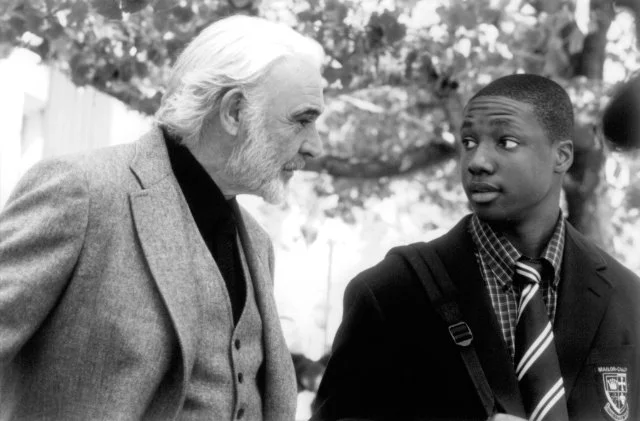
Soup Questions from Finding Forrester

First of all, let me tell you how much I love the movie Finding Forrester 2000. It is a movie that is about writing camouflaged as a basketball movie. I know Connery has done a ton of great movies, (Untouchables anyone?) but this is my favorite of his. The character he plays mirrors who he was in real life at that point; a master of his craft, but clearly in the winter of his life - Connery only did two more movies after this one ending a 50 year career in acting. Juxtapose that with the fact that Rob Brown had never acted and was trying to get hired as an extra thinking that it would help him pay off a $300 phone bill. Gus Van Sant of Good Will Hunting fame saw something in him obviously and the rest is history.
One of the very best concepts to come out of this movie is the idea of ‘soup questions.’ Watch the scene below.
So, soup questions. The first time William Forrester and Jamal Wallace talk about ‘soup questions,’ the conversation feels almost throwaway—two people circling an abstract idea in a cluttered Bronx apartment. But literarily, this moment is a quiet thesis statement for the entire film. When William tells him to stir the soup, Jamal asks why their soup never gets anything on it. Jamal asks why he needs to do this and William explains that he doesn’t want a skin to form on his soup. Jamal then asks a personal question. To which Forrester responds, ‘That is not a soup question.’
A soup question is a question which will benefit the person asking. Jamal understands now that there are various ways to make soup, benefitting him and his knowledge ticked up. When he follows that with a question about whether or not Forrester ever goes outside, William explains that details about his life do not benefit him and therefore it was a bad question.
Jamal listens more than he speaks. This is crucial. The scene establishes Jamal not as a prodigy eager to display brilliance, but as a thinker absorbing a worldview. Forrester is not teaching him what to think about soup questions; he is teaching him how to see them. The lesson is perceptual, not informational.
Stylistically, the apartment setting reinforces the theme. The conversation occurs outside institutional space—no classroom, no desks, no grades. Knowledge here is intimate, almost domestic. This contrast matters because it frames genuine learning as something that happens in private.
I went on a deep dive regarding soup questions. I learned about appreciative inquiry which is a method that I think closely follows Forrester’s ideal format for questioning.
“...an approach that values all voices, seeks to inspire generative theories and possibility thinking, opens our world to new possibilities, challenges assumptions of the status quo, and serves to inspire new options for better living.”
This is a concept that if I could apply to every facet of my life, from personal to professional, there would be tremendous benefits. Point of fact, I believe every single relationship that I engage in would improve dramatically. If two people engaged in a conversation with this mindset it would be one where the refinement of beliefs and ideas could explode in such a way as to potentially, and perhaps dramatically, further their personal evolutions.
This is incredibly hard to do. Once I thought about it, I started trying to ask only ‘soup questions’ and quickly discovered that I pollute the world with banal inquiry quite a bit. I also began listening to whether or not other people were asking ‘soup questions’ and rapidly discovered that I am not alone in bringing inaneness to the world.
But is that a bad thing? If I ask someone how their day is going - not soup. Inquire as to how someone’s family is - no soup there either. Are those questions stupidly just filling up the quiet, or are they demonstrating true interest in another person’s life? I know my wife is a stickler for asking questions about other people’s jobs and lives. (and she notices when other people do not show interest in her life as well) They are not ‘soupy questions.’ They seem to engage the person she is conversing with and engages with them on a personal level. How would anyone ever get to know another person without asking ‘non-soup questions?’ Is the line crossed if someone were to ask too personal a question? I think so, but isn’t nuance exciting?

Matthew

The Gospel of Matthew presents Jesus as the long-awaited Messiah and King who fulfills the promises made to Israel. It opens with His royal lineage and birth to show that God’s plan has been unfolding for generations. Through teachings like the Sermon on the Mount, Jesus redefines righteousness as a matter of the heart, not just outward behavior. Parables reveal that the Kingdom of Heaven grows quietly but transforms everything it touches. Matthew highlights the contrast between authentic faith and empty religious performance. Miracles and confrontations with religious leaders show Jesus’ divine authority and the cost of following Him. The book ends with the Great Commission, sending believers to spread this kingdom to all nations.
These are totally not my words…the above words, not the ones below this.
Matthew 1
Lots of names - almost skipped the chapter, but saw Joseph making good decisions at the bottom so read about his dreams, etc.
Matthew 2
Jesus’ birth. It seems pretty nutty that they encapsulated his birth in 3 scriptures. It is also interesting to me the amount of times prophecy is validated in Matthew - out of Egypt I called my son; that he would be called a Nazarene.
Matthew 3
Locusts are gross and are not to be eaten.
The honor of baptizing Christ…
The voice from heaven.
Matthew 4
Temptation 3X
Jesus’ ministry begins
Can you imagine someone asking you to stop what you are doing, leave everything behind and follow someone? Jesus had 99 aura.
Jesus starts healing folks - why was it so hard to believe that He was the son of God when He was able to do all of these things? Here is where my intellectual hypocrisy really gets going - I know Jesus is lord and I am well aware of many of his rules and instructions for life here on earth and yet I keep getting sideways - would watching a miracle conducted in front of me change this? I doubt it - I am sure I would be right there with the disciples. Like Paul said, “I know what I am supposed to do…”
Matthew 5
Sermon on the Mount
There are really a lot of rules on how to do things - all excellent, and all ones I fail at pretty repeatedly.
Are there a lot of them that indicate that how you think is just as important as what you say and do? This makes my failures even more lengthy.
Matthew 6
Love the Lord’s prayer.
I can still be tempted by the allure of this world - stuff collecting is a problem, but not as much as it used to be - Progress!
If the birds are good to go, then I won’t worry too much.
Matthew 7
' “Do not judge, so that you won’t be judged. For you will be judged by the same standard with which you judge others, and you will be measured by the same measure you use. '
Matthew 7:1-2 —> Another tough one
'Don’t give what is holy to dogs or toss your pearls before pigs, or they will trample them under their feet, turn, and tear you to pieces. '
Matthew 7:6 —> Not really sure what this one means
“Ask, and it will be given to you. Seek, and you will find. Knock, and the door will be opened to you. For everyone who asks receives, and the one who seeks finds, and to the one who knocks, the door will be opened.'
Matthew 7:6-8 —> this is a good one too. What about when I am asking for help or to be shown the way to stop sinning and doing things that I know are wrong…and I do not feel help? God’s time is perfect time? I suppose so, but this makes me angsty.
Matthew 8
I dig the story about the centurion for some reason. That dude was willing to take Jesus at his word in the workings of a miracle. Crazy, supernatural power and he needed zero verification and/or reassurance - you said so and thats all there is to it.
More fulfilling prophecy with Peter’s mom.
The storm is another example - I look at the disciple and think, “how could you think anything bad is going to happen? Jesus is in the boat!” Those silly disciples…then I go and do something stupid…wasn’t there something about a plank in one’s eye in the last chapter??
Don’t get why the demons wanted the pigs, but whatever.
Matthew 9
The pharisees really didn’t dig Jesus out there making people’s lives better. He was taking their authority away from them. Who was going to kowtow to them if that kept occurring?
Love the bit about sick people need doctors, not the healthy - but who is healthy??
14Then John’s disciples came to him, saying, “Why do we and the Pharisees fast often, but your disciples do not fast? ” 15Jesus said to them, “Can the wedding guests be sad while the groom is with them? The time will come when the groom will be taken away from them, and then they will fast. 16No one patches an old garment with unshrunk cloth, because the patch pulls away from the garment and makes the tear worse. 17And no one puts new wine into old wineskins. Otherwise, the skins burst, the wine spills out, and the skins are ruined. No, they put new wine into fresh wineskins, and both are preserved.” — someone explain this concept to me.
Matthew 10
For you will be given what to say at that hour, 20because it isn’t you speaking, but the Spirit of your Father is speaking through you. —> I say this to myself when I am talking to students all the time. I like to think that I really cannot screw it up if this is what I am doing/thinking.
' “Therefore, everyone who will acknowledge me before others, I will also acknowledge him before my Father in heaven. But whoever denies me before others, I will also deny him before my Father in heaven. ' Matthew 10:32-33 —> Is this a literal statement or a metaphor?
Matthew 11
' “Truly I tell you, among those born of women no one greater than John the Baptist has appeared, but the least in the kingdom of heaven is greater than he. From the days of John the Baptist until now, the kingdom of heaven has been suffering violence, and the violent have been seizing it by force. For all the prophets and the law prophesied until John. 'Matthew 11:11-13 —> Kingdom of heaven suffering violence??
' “Come to me, all of you who are weary and burdened, and I will give you rest. Take my yoke upon you and learn from me, because I am lowly and humble in heart, and you will find rest for your souls. For my yoke is easy and my burden is light.”' Matthew 11:28-30 —> This one resonates for me. What we are being asked to do is not that hard, in fact, I cannot seem to think of a single rule/law we are given by Christ that does not make us better people and our lives better.
Matthew 12
'Therefore, I tell you, people will be forgiven every sin and blasphemy, but the blasphemy against the Spirit will not be forgiven. Whoever speaks a word against the Son of Man, it will be forgiven him; but whoever speaks against the Holy Spirit, it will not be forgiven him, either in this age or in the one to come.' Matthew 12:31-32 —> This is the unforgivable sin, yes? Explain please.
'I tell you that on the day of judgment people will have to account for every careless word they speak. For by your words you will be acquitted, and by your words you will be condemned.”' Matthew 12:36-37 —> Terrifying.
Who is the Queen of the South? 12:42
'While he was still speaking with the crowds, his mother and brothers were standing outside wanting to speak to him. Someone told him, “Look, your mother and your brothers are standing outside, wanting to speak to you.” He replied to the one who was speaking to him, “Who is my mother and who are my brothers? ” Stretching out his hand toward his disciples, he said, “Here are my mother and my brothers! For whoever does the will of my Father in heaven is my brother and sister and mother.” Matthew 12:46-50 —> Was this just an example that our brothers and sisters in Christ are even more important than our earthly family? Thats the way I am reading it.
Matthew 13
'He answered, “Because the secrets of the kingdom of heaven have been given for you to know, but it has not been given to them. For whoever has, more will be given to him, and he will have more than enough; but whoever does not have, even what he has will be taken away from him. That is why I speak to them in parables, because looking they do not see, and hearing they do not listen or understand. ' Matthew 13:11-13 —> I need clarification and instruction as to what this means.
'He answered, “Because the secrets of the kingdom of heaven have been given for you to know, but it has not been given to them. For whoever has, more will be given to him, and he will have more than enough; but whoever does not have, even what he has will be taken away from him. That is why I speak to them in parables, because looking they do not see, and hearing they do not listen or understand. ' Matthew 13:11-13 —> I assume this means that he stumbled upon this treasure, but he didn’t own the field, so to get the treasure he had to buy the field? I do not understand exactly what this is trying to say to us.
Matthew 14
This chapter is all about poor John missing his head, feeding lots of people, miracles on water, and lots of healing.
If there was any doubt to the disciples that Jesus was the Son of God, one would imagine that this chapter cinched it.
Matthew 15
'He answered them, “Why do you break God’s commandment because of your tradition? For God said: Honor your father and your mother; , and, Whoever speaks evil of father or mother must be put to death. But you say, ‘Whoever tells his father or mother, “Whatever benefit you might have received from me is a gift committed to the temple,” he does not have to honor his father.’ In this way, you have nullified the word of God because of your tradition. Hypocrites! Isaiah prophesied correctly about you when he said: This people honors me with their lips, but their heart is far from me. They worship me in vain, teaching as doctrines human commands.”'
Matthew 15:3-9
—> I need this above to be put in Oestreich language, one that I can understand.
'“Don’t you realize that whatever goes into the mouth passes into the stomach and is eliminated? For from the heart come evil thoughts, murders, adulteries, sexual immoralities, thefts, false testimonies, slander. These are the things that defile a person; but eating with unwashed hands does not defile a person.”'
Matthew 15:17,19-20
—> more Oestreich language
More fish and loaves
Matthew 16
Sign of Jonah?
I feel bad for the disciples - there are a lot of times when I do not understand what Jesus is talking about. There were around him, granted, but they still had lots of people attempting to influence them to believe that their teaching were the most important and that Jesus was a heretic.
' “But you,” he asked them, “who do you say that I am? ” Simon Peter answered, “You are the Messiah, the Son of the living God.” Jesus responded, “Blessed are you, Simon son of Jonah, , because flesh and blood did not reveal this to you, but my Father in heaven. And I also say to you that you are Peter, and on this rock I will build my church, and the gates of Hades will not overpower it. I will give you the keys of the kingdom of heaven, and whatever you bind on earth will have been bound in heaven, and whatever you loose on earth will have been loosed in heaven.” Then he gave the disciples orders to tell no one that he was the Messiah. '
Matthew 16:15-20
—> This is confusing. ‘because flesh and blood did not reveal this to you…’ How was it not flesh and blood that revealed? SP had been there with Jesus through the boat and not enough food. Seems pretty flesh and blood to me.
‘Get behind me Satan!” Peter was trying to protect Jesus, which was nice of him I suppose, particularly in light of the fact that he did not have the full picture in place. It is also an extraordinary example of Jesus’ heroic nature. To know the hell that was coming and to be willing to move forward.
'For the Son of Man is going to come with his angels in the glory of his Father, and then he will reward each according to what he has done. '
Matthew 16:27
—> this is scary. I feel like I have done so many things wrong that I am going to have a rough go of it when I stand before Him.
Matthew 17
Okay, maybe I am dumb, but why is Elijah such a big deal? Why is he going to put all things right??
Mustard seeds
Why the fishing for coins??
Matthew 18
Discuss the metaphor for the child or being child-like.
Removing body parts - take anything in your life that causes you to sin, you better get rid of it straight away.
The sheep thing tells me that God is more interested in those that haven’t come to Christ yet.
Here are the rules for rebuking people.
The story about the dude who owed money = you better forgive people like God does or bad things are heading your way
Matthew 19
Jesus would not be able to deal with how things are going now when it comes to sexuality.
Eunuchs? sigh.
Children - I think I understand this, but lets talk about it anyway.
The young man stuff>heaven
How to be last?
Matthew 20
Does the bit with the denarius mean that even if you come to Christ in your last moments, you are the same as someone who has been a Christ follower their whole lives?
I can imagine that when the disciples heard Jesus talking about dying it tripped them out.
Wouldn’t being in heaven and having spent time with Jesus be enough for you? Still compete.
Matthew 21
Why a donkey? Humble, I get it. More prophecy.
I love that Jesus demonstrated anger.
Metaphor with the fruit tree - again?
Why wouldn’t Jesus tell them by what authority He did things?
28 “What do you think? A man had two sons. He went to the first and said, ‘My son, go work in the vineyard today.’
29 “He answered, ‘I don’t want to,’ but later he changed his mind and went. 30Then the man went to the other and said the same thing. ‘I will, sir,’ he answered, but he didn’t go. 31Which of the two did his father’s will? ”
They said, “The first.”
Jesus said to them, “Truly I tell you, tax collectors and prostitutes are entering the kingdom of God before you. 32For John came to you in the way of righteousness, and you didn’t believe him. Tax collectors and prostitutes did believe him; but you, when you saw it, didn’t even change your minds then and believe him.
This one makes no sense at all to me. Which one was it then and why did Jesus not answer them?
OK - the bit about the servants being sent to the field and killed, then his son killed, and when the owner came out there and Jesus said that prostitutes would be in heaven first…I do not understand this one at all. This was about the Pharisees?
Matthew 22
The entire story about the wedding - first he can’t get anyone to come and then some people do but the dude didn’t have the right clothes so he was tossed out - explain!
This chapter reminds me of math word problems.
We need to go through these and talk about them.
Matthew 23
Hypocrisy vs. authentic faith
Dangers of religious showmanship
Legalism to crush others
Neglecting weightier things
Bling leadership
Inner corruption with outer cleanliness
Responsibility doesn’t go down with influence - it goes up
Grief beneath the rage. Jesus wants to be a mother hen with judgement flowing from love, not cruelty
Matthew 24
'Blessed is that servant whom the master finds doing his job when he comes. ' Matthew 24:46
Matthew 25
What is the metaphor for the oil? Readiness.
You better do some stuff with the talent you have been given dude, or there will be troubles for you my not-so-faithful servant.
You better treat people like Jesus did, or there will be issues
Matthew 26
Things go as Jesus has warned them all along
Betrayal
First communion - the prayer that says it all
3x Peter, 3x
You can’t stay awake, but neither can I bc I sin all the time.
Slapping Jesus was pretty awful.
See Peter?
Matthew 27
Its really sad about Judas - did he really ever have a chance or was it pre-ordained that this would happen?
Barabas>Jesus??? Insanity
Pilate, washing your hands is not going to be enough.
The 2 guys next to him - the humility of the one what knew he was getting what he deserved…
Matthew 28
Resurrection
The Great Commission

The state of Indiana hates me

This picture above is a hoax. It is catfishing. It is fake news. Why do I know this? I know this because it looks pleasant. Big flakes of snow makes for a pleasant vista. The fact that there is not snow on the ground would indicate that the temperature is not too terrible. A please vista for all to see and experience. Do not be fooled.
HERE IS WHAT IT IS REALLY LIKE

Winter in Indiana is not heaven or hell, it is permanently purgatory. It’s rarely the pretty kind of cold. It’s gray, damp, windy, and indecisive. Schizophrenia is not just about people, it is also about climate here in the Hoosier state. Snow doesn’t fall gently; it loiters. One day it’s 12°, the next it’s raining on dirty snowbanks like the sky has given up. There is no payoff—just sludge. This sludge permeates you entire existence; walking to your car? Yep. Take the garbage out? Put on hip waders.
There is no escape.

The sky disappears. Weeks of solid gray. No drama. No storms worth watching. Just a flat, oppressive ceiling that makes 3 p.m. feel like 7 p.m. Seasonal depression isn’t a theory here—it’s a lifestyle. At one time I thought those UV lights people blasted themselves with were silly. No longer and my hypocrisy looking back is towering.
Everything is brown and dead, but not cleanly dead. It looks like it is 1% alive and straight out of a poem by Edgar Allan Poe. Trees look like skeletons that never got buried properly. Lawns are a mushy blend of mud, bad decisions, and regret. Other places get snow-covered beauty or early blossoms. Indiana gets exposed dirt.
The cold is not heroic, it is sneaky. This isn’t Minnesota cold where you respect it. Indiana cold seeps into your bones, your socks, your mood. It’s the kind of cold that makes you tired instead of alert. The occasional day where Indiana decides to tease you, where the temperature suddenly is 48 degrees is an ambush. Mother Nature knows she is going to freeze you out the very next as she is a vile seductress
There’s nothing to look forward to… yet. Holidays are over. Spring is a rumor. March pretends it’s turning a corner, then slaps you with a late snow or freezing rain like a prank you didn’t consent to. There are days off in the months of January and February to offset some of the drudgery, but March…brutal. March is the cruelest month. Zero days off and the month has 31 days. Maybe this impacts teachers more than everyone else. And maybe you are thinking teachers have all summer off so quit complaining…you shut up. nIt dangles hope. A 55° day tricks you into believing. Then—bam—snow, wind, and 38° rain. Indiana doesn’t ease into spring; it gaslights you first.
January to March in Indiana strips away novelty. No scenery. No sunlight. No seasonal charm. Just endurance. You don’t live here during these months—you outlast them. If Indiana were a movie, January–March would be the bleak middle act where the character stares out a window and questions their choices… before the corn and thunderstorms redeem the place later.
Okay, Indiana is not all bad by any mean. She does some things really well. If you like soybeans - you are good to go. Enjoy the pace of the Midwest? Roger that. I have lived in the Indianapolis area longer than I have ever lived anywhere in my life and these have been the best parts of my life, so I want to leave you with one of the things that Indiana does so very, very well.


I have become the player to be named later.
I loathe plagiarism - in writing, but not in the theft of ideas. Being an advocate of Steal like an Artist, I believe that if we take the ideas of someone else, then spin, turn, and adapt them, they can become our own. We are actually giving the original artist love when we do this. One concept engenders another, ideas being reborn in a reformat.
Okay, where am I going with this? While teaching Film as Literature, we watched 10 Things I Hate About You which embodies the ideals I have laid out for you above. This is due to the fact that 10 Things is based on (in some cases loosely and others directly) William Shakespeare’s The Taming of the Shrew. I could go on and on about the ways in which they correlate, but thats not why I am writing this.
There is a scene where Kat Stratford, 10 Things protagonist, speaks with her father, Walter Stratford. He is lamenting the fact that he is no longer a big part of Kat’s life, that she has not needed him for a long time and as she is headed off to college, this situation will only become worse.
“Walter Stratford: You know fathers don’t like to admit it when their daughters are capable of running their own lives. It means we’ve become spectators. Bianca still let’s me play a few innings - you’ve had me on the bench for years. When you go to Sarah Lawrence, I won’t even be able to watch the game.”
As a baseball guy, this adage resonates…because I am going through some of that right now. Lets be cloying and take it a little bit further - I am that player that is on the downside of his career, having enjoyed his peak years in the sun, having experienced those 15 minutes of fame that everyone talks about…and knows they will never have those moment of glory ever again. That player often becomes reticent about their future because they are aware of the fact that the end, while not right now, is not long in coming.
I like to think that I have had a positive impact on my son. I know that I have had so much fun its crazy. I can remember all of the moments - the tickles, the belly laughs, the way his arm feels around my back when I picked him up and hugged him - its all right there in my mind. I can see it, hear it, and feel it. It is so poignant that it can overpower me emotionally when I think about it. I want to go back to those moments and relive them in the same joyous way I experienced them the first time. What I would not give to lay on the floor and play legos again.
I know I can’t.
Now he isn’t around as much; sometimes barely at all. Busy. A lot. He leads a very full life. He is driven and he chases his dream as hard as any student I have ever been around. He is a pain in the ass, oftentimes appearing so self-absorbed it can be infuriating, but I know that he is an incredibly good person. He has a soft side - its just doesn’t come out as often as maybe we might like. There are so many reasons that I am proud of him, so many. I love him as much as humanly possible. The future is bright.
I am, however, occasionally struggling with the transition to a bench role, prior to my inevitable place solely in the stands.